Valentine’s Day Haters
In Luke 7:36-50 we find a story where Jesus displays the scandalous power of love and forgiveness to a woman who crashes a party. Speaking of love and forgiveness, Valentine’s Day is a mere two weeks away. Anyone excited about Valentine’s Day? It’s a complicated holiday. Some people love getting dressed up, going out for a nice dinner, or getting chocolates. Other people hate Valentine’s Day. If you google, “I hate Valentine’s Day,” you will get article after article outlining disdain for February 14th (Sorry if that’s your birthday!). Based on my in depth research, I suspect more people hate the holiday than love it.
There is one major complaint about Valentine’s Day that gets to the heart of the haters: roses. They are a common gesture on Valentine’s Day. More to the point, roses as an apology are inadequate. Did you know some people have assigned certain flowers meaning when it comes to apologies? Roses have long been associated with love and emotions, which makes them an ideal gift for an apology. For example, red roses indicate passionate love for a partner. White roses signify the acknowledgement of past mistakes and a desire for a fresh start. If you combine caused florists to recommend them as a perfect gift displaying your desire for forgiveness and love. Don’t be afraid to add a dash of baby’s breath letting your partner know you are hoping for renewed trust! Here is what I want you to see: when forgiveness is true, love deepens. That is Jesus’ climactic message in Luke 7:47. Jesus says this,
“But he who is forgiven little, loves little (Luke 7:47, ESV).”
Little forgiveness equals little love. By contrast, if you commit a grave sin with wide ranging impact and hurt—it requires a larger measure of forgiveness leading to an outpouring of love. As we will see, in order to understand forgiveness you need to recognize the depth of your sin.
The Party
Our section opens with a party, a banquet hosted at the house of a “certain” Pharisee. What’s interesting is that this scene contrasts with Luke 5:27-32. There, Jesus also goes to the house of a tax collector and the main guests are “sinners.” In that scene, the Pharisees burst in and complain. Now, in Luke 7:36-50, Jesus has another meal with a Pharisee, but the guest list is likely a “who’s who” of the contemporary cultural elites.
This sets up a contrast with Luke 5. Instead of the Pharisees crashing the party, a different figure shows up.
“And behold, a woman of the city, who was a sinner, when she learned that he was reclining at table in the Pharisee’s house, brought an alabaster flask of ointment (Luke 7:37, ESV).”
This time a “sinner” enters the Pharisee’s home. The word, behold, indicates that this was a shocking turn of events. The first question you might ask is—how did she get in? The Pharisees need better security! Well, in the ancient world, much of life was lived in public, not behind walls. Entertainment was a public affair—the doors of the house would be wide open and, basically, anyone could wander in.
This woman takes a huge risk to enter the party—she knows her status, she knows she will be looked down upon. Yet, the fact the she brings a gift of oil indicates this was premeditated. She did not just wander in. Why would she do this? Let’s examine her interaction with Jesus.
“… and standing behind him at his feet, weeping, she began to wet his feet with her tears and wiped them with the hair of her head and kissed his feet and anointed them with the ointment (Luke 7:38, ESV).”
What is this all about? She comes into this party, ignores all the elites, and runs right to Jesus. This caused a commotion, I guarantee. I think she is weeping loudly. She gets at Jesus feet and wails! Are they tears of repentance? Or are they, as some have suggested, tears of anger? These could be tears of rage because these Pharisees, these elites, have not recognized who Jesus is. They have not extended him a kiss of greeting or washed his feet. She sees what they miss—he is the King who is worthy of worship! So she bows at his feet and lets down her hair in reverence!
This scene offers a common Lukan contrast: there are overt sinners, like this woman. And there are cover sinners, like the Pharisee, who we will examine in the next movement. What does this overtly sinful woman teach us about our approach to Jesus? I would suggest the text shows us three actions:
First, RISK. This woman knew her status in society, she knew the reception the elites would offer. Maybe they would throw her out of the house! Maybe they would put her in jail! And yet … she took the risk to run to Jesus. She chose to publicly associate with Jesus. What are you willing to risk to come to Jesus? Our culture downplays sin. People try to cover their mistakes for fear of shame. It is becoming increasingly harder to say you love Jesus. Earlier, John The Baptist spoke truth in difficult times … and eventually he would be killed. There is risk in coming to Jesus. Confessing your sin and coming to Jesus requires risk, because when people know your sin they might look at you differently. Jesus doesn’t. He already knows your sin. Bring it to him.
Second, REVERANCE. Do you see the way this woman treated Jesus? She kissed his dirty feet in worship. She cried tears of anger because others were not worshipping him. This act of humility shows us the lengths she was going to worship Jesus. We have no concept of this in the 21st century. We come to worship in our climate-controlled sanctuary, with our clean clothes and sanitary homes. This woman did not care about any of that—it was all about Jesus. Are you revering him in your life? He is worthy.
Third, REPENTANCE. The tears she wept, the tears she rained down on his feet to some extent, I believe, showed her contrition and humility. She desired peace with the God of the universe and she recognized this prophet, this Jesus could offer that. And he does later in the passage. Friends, do you recognize your sin … and will you leave it at Jesus feet? Some people, they know they are sinners, but nothing changes. Their “repentance” is false. We need to come to Jesus like this woman and leave our life of sin. Are you repenting regularly to Jesus?
The Story
Next we turn to Simon the Pharisee. He has a problem with the sinful woman.
“Now when the Pharisee who had invited him saw this, he said to himself, “If this man were a prophet, he would have known who and what sort of woman this is who is touching him, for she is a sinner (Luke 7:39, ESV).”
He is judging the woman and he is judging Jesus. He thinks, “how could this man, who says he is a prophet, let this unclean woman, this sinner, touch him!? Gross!”
This verse places a magnifying glass on our own hearts. I suspect, many of us are reticent to air our dirty laundry, like the sinful woman. Our social media society has taught us to curate our images—we strive to put our best foot forward. But in our hearts we are like the Pharisee. We look at other people and say, “At least I am not as sinful as them!” We are COVERT sinners! Now, Jesus is going to turn to us and tell a story.
“A certain moneylender had two debtors. One owed five hundred denarii, and the other fifty. When they could not pay, he cancelled the debt of both (Luke 7:41-42, ESV).”
This might seem like a brief story by modern standards—let’s call in a scenario based question. Here is what’s amazing—in three sentences, Jesus cuts to heart of the matter. What do we see?
First, we have a moneylender. In modern terms, this is your banker or creditor. This is your Wells Fargo, your SoFi, your CitiBank. Then you have two individuals who have loans with this bank—maybe it’s a mortgage, an auto loan, a credit card. Actually, let’s use student loans, which you may remember can’t be used in bankruptcy. Bottom line: both these people have DEBT. However, Jesus makes it interesting—one owes 500 denarii (Almost 2 years salary), the other owed 50 denarii (2 months salary). So, one student went to a private school, the other went to community college! Then, for whatever reason, Wells Fargo becomes benevolent and cancels the student loan for both—woah! That’s great news!
Now, here is the thing: one owed a lot, the other owed a little. Both debts were forgiven. In fact, that word, “cancelled,” can be translated as “graciously forgiven.” Would you have a different reaction depending upon your debt? Jesus, then, asks an interesting question. He does not say, “wasn’t it great they both were forgiven?” He does not ask, “Is this an example of economic inequality?” NO! He asks a deep, important question that gets to the heart:
“Now which of them will love him more?” (Luke 7:42, ESV)
Who will love more? Why does Jesus ask this question? He is, graciously trying to lead the Pharisee, and us, to deeper self-reflection and awareness. Yet, while one number was large and the other were small … THEY WERE BOTH IN DEBT! Both of them would go to debtor’s prison but for the grace of the moneylender. He is tying the amount of their debt to the depth of their love.
What just happened? I’ll tell you what happened: Jesus crashed the party. Jesus ruined the party. Jesus held a mirror up to the Pharisee’s heart in public and exposed his sin for all to see. Remember—Luke is always trying to show us that Jesus came to save lost people who don’t know they are lost.
Is that you? Where does Jesus need to ruin your party? This is the point for many of us: we think this world, this life, is one big party that we are hosting. We think it is all about us! And, because we are the host, we have an image to curate. Don’t let people see the room in your house that is a mess. Instead, let them see the wonderfully curated room! We think we can hide. We will do whatever we can to maintain our image. Some of us are working so hard to make ourselves look good, to hide our sin, for other people and it’s exhausting! What will it get us??? We have no peace!
Friends, Jesus wants to ruin your party so that you can find true peace and joy!
The Scandalous Climax
Now we’ve reached the scandalous climax. When Jesus asked Simon, “Do you see this woman (v. 44)?” He knew he saw her. However, he did not see her as Jesus saw her. Jesus sees her inside and out and he is about to change her life. In doing so, he offers Simon an invitation to a transformed life as well. Jesus concludes:
Therefore I tell you, her sins, which are many, are forgiven—for she loved much. But he who is forgiven little, loves little.” (Luke 7:47, ESV)
This conclusion is scandalous. “Her sins, which are many, are forgiven …” What??? This woman disrupted the party, Jesus insulted the host and now to add insult to injury he directly forgives this woman:
And he said to her, “Your sins are forgiven.” Then those who were at table with him began to say among themselves, “Who is this, who even forgives sins?” (Luke 7:48-49, ESV)
“Who is this, who even forgives sins?” Everyone around the table is whispering to themselves. I wonder, are they more shocked at his forgiveness than his miracles??? Often, when we read about a miracle in Luke, the people are AMAZED! Here, I think they are shocked because their world has been turned upside down—only God can forgive sins! Yet, Jesus does it. This is scandalous! It is the scandalous power of forgiveness. And don’t miss it’s transformative effect. Jesus says, “he who is forgiven little … loves little.”
So, Jesus offers these final words to the woman at the party:
And he said to the woman, “Your faith has saved you; go in peace.” (Luke 7:50, ESV)
This is the last thing he says to the woman after this crazy scene. He knows she cannot stay. This woman needed an amount of faith to take the risk to enter this party. As a result, she has experienced forgiveness. Don’t miss that last clause: “Go In Peace.” Do you see what Luke is doing? He is bringing together the Isaiah 52 imagery of the whole scene. This woman has come in faith, she has kissed the beautiful feet of the one who has brought the good news. Now … now … she can have peace. Why? Because of the forgiveness and love of Messiah, the Savior, has been given.
He is the one who brings the RED ROSE of love. His blood ran red on the cross to cleanse us like the WHITE ROSE. Love and forgiveness met on the cross. Because Jesus died and then rose to life, defeated sin, hell death, and Satan …. he breathes the BABY BREATH of hope into our lives! He is offering us the flowers of the Gospel. Will you take them? Some of us today resonate with the woman in this story. You feel like an outcast—these flowers are a reminder that on the cross Jesus showed his love for you. If you resonated with the Pharisee—and your heart is hard—these flowers are a reminder that Jesus love can thaw the coldest heart. I don’t care how much you hate Valentine’s Day … TAKE THEM! Receive the good news! How beautiful are the feet of the one who brings the good news?! They are so beautiful that we must bow at his feet, lay down our crowns, and celebrate him. This world is not our party … it is His party! He is inviting us in. That should bring us to tears. That should give us peace.




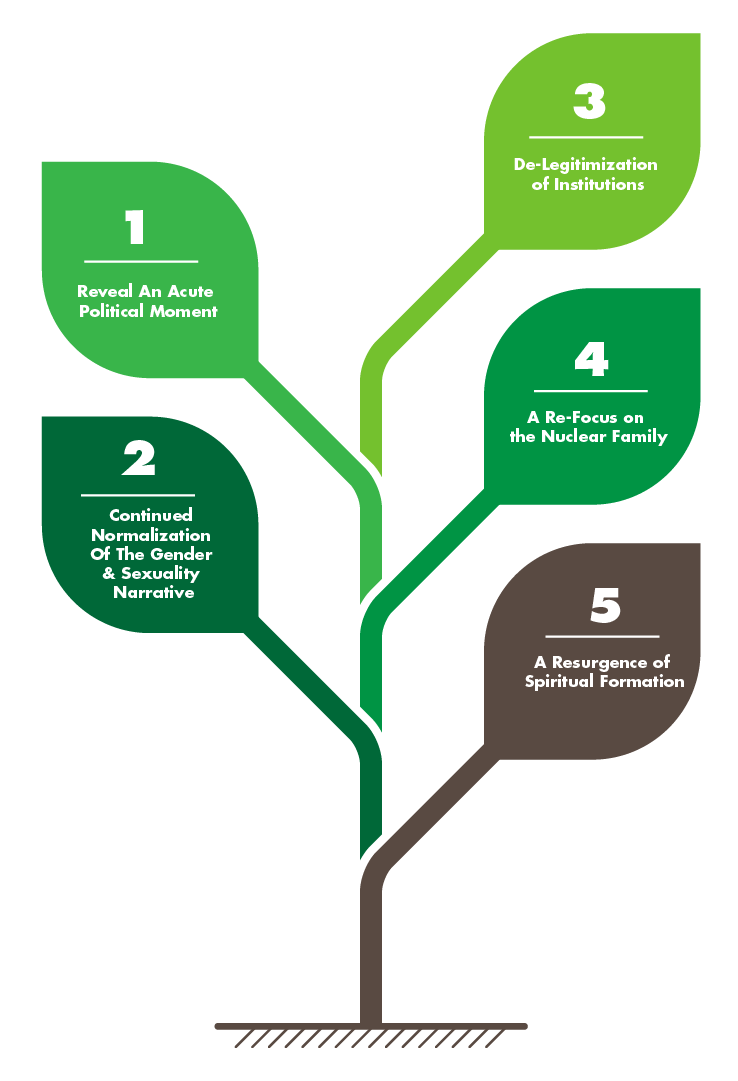

 A Resolute Time |
 With that said, let me come back to my initial image of the snowstorm. I do believe 2024 is a year that will pose some challenges; we just do not know how much snow we will need to shovel. Despite the uncertainty, this is a resolute time for Christians seeking to live out their faith. What do I mean by that? To be resolute is to be firm or determined; unwavering. Or, if I put it in a more familiar term, we need some New Year’s Resolutions that match the current moment.

 Many Christians have not come to grips with this reality. In fact, many Christians, and influential Christian leaders, are arguing just the opposite: our missional effectiveness should be oriented toward the secular world
 Leaving Everything