Our Christian Hope in the Middle of a Pandemic (Part 2)

In part 1 of this blog post, we discussed the mixed messages being sent by Christians during this pandemic. We discussed the meaning of Psalm 91 and our ultimate promise of divine protection. In this post we will dive deeper into the concept of God’s promises. 

Which Promises in the Bible Are For Me?

Jen Wilkin wrote an excellent piece on the topic of bible promises. She listed several pitfalls to avoid. Some of these were 1) Confusing a promise with a principle 2) Ignoring the context and 3) Overlooking the “if.” Psalm 91 was written to the people of Israel who were living under the Mosaic law or the “Old Covenant.” We no longer live in this age. All the Bible is inspired, but it was not all written to every person of every age. Israel was a theocracy established by God who gave them the Law as their constitutional covenant. This covenant was a bilateral (two-sided) covenant and it contained conditional blessings. If you go back and read all the covenant blessings (and curses) given to Israel, you will notice how closely connected they are to “the land.” The blessings include things like protection from political enemies, large bounties of food supply, and overall national safety.

Old Covenant Promises

God laid out very specific blessings (for obedience) and very specific curses (for disobedience) for His people, Israel. Jen Wilkin states: “Promises that contain an “If” require some form of obedience before we can expect them to come to pass in our lives. They are conditional. If we want to claim them, we had better be ready to act in obedience to what they require … Often “if” promises of blessing are accompanied by corresponding “if” warnings about disobedience.” We find all these conditional blessings and curses spelled out in detail in places like Deuteronomy 28 and Leviticus 26. For example, Deuteronomy 28:20-22 says this:

The Lord will send on you curses, confusion, and frustration in all that you undertake to do, until you are destroyed and perish quickly on account of the evil of your deeds, because you have forsaken me. The Lord will make the pestilence stick to you until he has consumed you off the land that you are entering to take possession of it. The Lord will strike you with wasting disease and with fever, inflammation and fiery heat, and with drought and with blight and with mildew. They shall pursue you until you perish.

Or as we read in Leviticus 26:23-25:

If in spite of these things you do not accept my correction but continue to be hostile toward me, I myself will be hostile toward you and will afflict you for your sins seven times over. And I will bring the sword on you to avenge the breaking of the covenant. When you withdraw into your cities, I will send a plague among you, and you will be given into enemy hands.

New Covenant Promises 

I was trained for ministry at Dallas Theological Seminary under a system of theology called “Progressive Dispensationalism,” whose proponents see a clear distinction between Israel and the Church. The Church is the gathering of Jews and Gentiles, set apart by God to be cross-cultural. The Church does not function under the old covenant. We don’t sacrifice animals anymore or follow many the ceremonial or civil laws given to Israel. We are not tied to a geographical land or under a centralized government. We are also not promised the kinds of material blessings of the Old Testament, instead we are the recipients of spiritual blessings in Christ (Eph 1:1-15). The blessings of the new covenant include amazing promises of forgiveness, eternal salvation, the presence of God, spiritual gifting and much much more. But, these blessings of the new covenant are not primarily physical.

When we as New Covenant believers reach back into the Old Covenant, we can get into difficulty theologically if we don’t interpret these texts properly. Claiming the promises or blessings of the Mosaic covenant for obedience implies we must also be held accountable for the covenant curses for our disobedience. That’s the deal with law. We cannot pick and choose. If we want to go back under the law, then that means we have to go back under the whole law (Gal 5:3). It’s all or nothing. The main problem with the old covenant was that no one could keep it. The law pointed us toward our need for the Messiah and for His redemption.

Enter Jesus. Even in the midst of the Old Covenant there was a New Covenant predicted in Jeremiah 31, instituted by Christ at the last supper and enacted through His death and resurrection. Let me be clear, living under the Mosaic law is not a viable option for the Christian. The old covenant is now obsolete. (Heb 8:13). Paul states, “If righteousness could be gained through the law, Christ died for nothing!” (Gal 2:21 NIV) New Testament believers need to be very careful how they appropriate the promises found in the old covenant, a covenant involving very material and earthly rewards.

In this age, New Testament Christians experience hardship, trials and pain, but all with great hope. Sometimes we in the church may see God’s powerful hand in miracles, other times believers may sometimes get sick, sometimes even get infected with a virus, and sadly sometimes die. As Christians, we grieve these losses as a result of the Fall and we receive comfort from God (2 Cor 1:1-10; Matt 5:1-10). The comfort we receive is that we never grieve without hope. His promises include His unfailing presence, our future hope in heaven, and our ultimate bodily resurrection. Here is an example:

Do not be afraid of what you are about to suffer. I tell you, the devil will put some of you in prison to test you, and you will suffer persecution for ten days. Be faithful, even to the point of death, and I will give you life as your victor’s crown. (Rev 2:10)

We proclaim that God is still good even in the midst of the difficulty and His glory triumphs – even in our suffering. The apostle Paul says it this way:

“We are hard pressed on every side, but not crushed; perplexed, but not in despair; persecuted, but not abandoned; struck down, but not destroyed. We always carry around in our body the death of Jesus, so that the life of Jesus may also be revealed in our body. For we who are alive are always being given over to death for Jesus’ sake, so that his life may also be revealed in our mortal body. So then, death is at work in us, but life is at work in you.” (2 Cor 4:8-12, NIV).

The Key of Promise

John Bunyan in his classic allegorical work, Pilgrim’s Progress, writes about a scene that deeply moved me when I first read this work years ago. Toward the end of the book, the main character Christian, who has been on a journey to the Celestial city, (which is a metaphor for the Christian life), veers off the difficult path to try and find an easier, smoother way, and that’s when he and his traveling partner, Hopeful, get captured by a vicious sadistic giant named Despair. The giant found them sleeping on his property and brought them back to his home, called DOUBTING CASTLE, and threw them into his dungeon. They began to pray and suddenly Christian remembered something, “What a fool am I, thus to lie in a stinking dungeon, when I may as well walk at liberty! I have a key in my (pocket) called Promise, that will, I am persuaded, open any lock in (this) Castle.” So they tried the key of promise in the dungeon door and it opened. 

Here’s the note from John Bunyan included at the bottom of the page — “Precious promise!  The promises of God in Christ are the life of faith, and the quickeners of prayer. Oh how oft do we neglect God’s great and precious promises in Christ Jesus, while doubts and despair keep us prisoners.” 

God’s promises are powerful in fighting despair. What are the promises we can hold onto? As Christians we long for Christ’s promise return. We have His promise of His Presence (Matt 28:19-20). We hold onto the Promise of His love (Rom 8:28-39). We have His promise of Wisdom (Js 1:1-5). We have His promise of strength in weakness (2 Cor 12:9-11). We have His promise of a peace that passes understanding (Phil 4:7). These are our great and precious promises (2 Pet 1:4). 

Until Christ returns to make all things new, we live in between these times. We live in what theologians call the “already / and not yet.” We will discuss this concept further in Part 3.

[ Part 1 ] [ Part 3 ] [ Part 4

References

Bunyan, John The Pilgrim’s Progress. Edited by Roger Sharrock and J. B. Wharey. (Oxford: Oxford University Press, 1975). Originally Published in 1678. 

Jen Wilkin’s full article referenced in this blog: https://www.thegospelcoalition.org/article/which-promises-are-for-me/

Darrel Bock. Progressive Dispensationalism. (Ada, Michigan: Baker Publishing Group, 2000)
Our Christian Hope in the Middle of a Pandemic (Part 1)

I am writing this post in the middle of the Coronavirus (COVID-19) pandemic which has completely upended our world. Politicians plan. Schools suspend. Businesses are bottoming out. Loved ones are lost. Our anxieties grow as the numbers infected every day rises along with the death toll and we realize we are living in unprecedented and scary times. What do the Scriptures say to God’s people during such a time as this? What is our distinctively Christian hope?

I have a burden. I have seen during this time of trouble some really theologically confusing messages coming from Christians. For example, I have seen some leaders saying this is all overblown and they are not going to shut their church assemblies down, even citing Hebrews 10:25 for scriptural support for this insubordination. I’ve heard other leaders say with certainty that they know this is in fact the end times and we are living in “The Great Tribulation” right now. I have seen televangelists saying reach out to the TV to be healed and others profiteering by selling some kind of strange remedy for this disease made from silver. With all of these twisted messages, I wonder, what are we communicating to the world? Where can we find an appropriate anchor for our souls in the midst of this storm?  

Another concerning trend I have observed from believers on social media is posting scriptures claiming “divine protection” from this virus, such as Psalm 91. Perhaps this is well-intentioned, but I am concerned that these scriptures are not being used with sound hermeneutical integrity. Do the scriptures really teach immunity from all diseases for believers in Christ? Theology matters. Misguided theology can result in serious spiritual fall out such as disappointment, confusion and even bitterness toward God. But does the Bible actually promise that Christians are “exempt” from the coronavirus as some kind of an unconditional guarantee? In this post, we will examine this claim and take a closer look at Psalm 91 (NIV) which says this:  

1 Whoever dwells in the shelter of the Most High will rest in the shadow of the Almighty.

2 I will say of the Lord, “He is my refuge and my fortress, my God, in whom I trust.”

3 Surely he will save you from the fowler’s snare and from the deadly pestilence.

4 He will cover you with his feathers, and under his wings you will find refuge; his faithfulness will be your shield and rampart.

5 You will not fear the terror of night, nor the arrow that flies by day,

6 nor the pestilence that stalks in the darkness, nor the plague that destroys at midday.

7 A thousand may fall at your side, ten thousand at your right hand, but it will not come near you.

While the words for “deadly pestilence” and “plague” (in verses 3 and 6) can certainly refer to the kind of circumstances we are dealing with in our day, it is far too simplistic to read this as a guaranteed promise of protection. Yes, it appears at first glance that the promises in Psalm 91 say that God will keep us “safe.” But what does that mean? Safe from what? What it doesn’t mean is that nothing bad will ever happen to you. Other Scriptures make this abundantly clear, such as Luke 21:16-18, “some of you they will put to death.” Christians can certainly pray for protection and healing and sometimes God may answer, but other times the Scriptures are clear that this world may bring trouble (John 16:33) and that God actually uses suffering in our lives to shape and refine us (James 1:1-10, Rom 5:1-5).

At this point in our epidemic, thousands of people including believers across the world have died because of Coronavirus (COVID-19). There is a tremendous loss of friends, parents, grandparents and children. There are also smaller losses: loss of travel plans, loss of time with loved ones, loss of income and a loss of a feeling of security. Has God’s word failed them? 

Does Psalm 91 really mean that those who trust God won’t be ensnared, won’t ever get a virus, won’t die in war, won’t experience sickness, won’t lose anyone in their family “their tent” to Covid-19, but will always be delivered and protected? To interpret this passage this way is to use it the way Satan used it. Satan wants us to think we should be exempt from all suffering. I believe this because this is actually how Satan used this exact psalm in the temptation of Jesus (see Satan’s use of Psalm 91 in Luke 4:9-11). What the devil did was he tempted Jesus to believe that His Father would never allow him to suffer. He even (mis)used the word of God to do so! Friends, I believe he does the same for you and me. Why? He does this so that when bad things do happen to us, we will cast off the fatherhood of God and become bitter and angry. I am urging you: Don’t fall for Satan’s trap. Our Lord did not. Instead of falling into the devil’s trap, Jesus embraced the cup His father gave Him. He wore the thorns. He endured the scourging. The nails pierced his hands and feet. He was murdered by wicked men. He endured the cross, all this for the joy set before Him (Heb 12:1-3). 

Often in a crisis, instead of a life of faith, we want to live a life where we can sense being in control. We want to perfectly be able to predict the future. This desire can be so strong that we even “use” God’s own word for our own purposes, not to rely on Him, but to feel a sense of control.  

“Safe” from What? 

So what does Psalm 91 really mean? It means that God will keep us safe, yes, but “safe” in the ultimate sense. It means that God will keep us safe from the worst kind of suffering – separation from God because of our sin. Even though we may suffer through great trouble, when we have faith, we know we will be safe in eternity with God. Such evil will never befall you.

Here is the way Charles Spurgeon described the meaning of Psalm 91: “It is impossible that any ill should happen to the man who is beloved of the Lord; the most crushing calamities can only shorten his journey and hasten him to his reward. Ill to him is not ill, but only good in a mysterious form. Losses enrich him, sickness is his medicine, reproach is his honor, death is his gain. No evil in the strict sense of the word can happen to him, for everything is overruled for good. Happy is he who is in such a case. He is secure where others are in peril, he lives where others die.” (The Treasury of David, Vol. 2, Part 2, 93). 

Did you notice that God said in Psalm 91:4, “He will cover you with his feathers, and under his wings you will find refuge”? The image there is of a mother bird which protects her chicks. This is the image of a substitute. In other words, if there’s horrible wind or rain or heat coming down, the mother gets hit with the wind and the heat and the rain instead of the chicks. If there’s a predator coming to eat them, the mother gets eaten. This is a picture of Christ our substitute. This is an image Jesus even uses, “O Jerusalem, Jerusalem … how often I have longed to gather your children together, as a hen gathers her chicks under her wings.” (Matt 23:37) Do you see what Jesus is saying? Jesus has become our substitute. Because He died for the sins of the world, all those who take refuge in Him will be kept safe … forever. In the end, “You will only look with your eyes and see the recompense of the wicked.” (Psalm 91:8).

Until His promised kingdom comes in all its fullness when disease and death will be no more, we wait. We wait in the sure and certain hope of the resurrection. We wait while holding on firmly to His precious promises. Which promises are for me? We will discuss this concept further in Part 2

[ Part 2 ] [ Part 3 ] [ Part 4

References

Charles Spurgeon. The Treasury of David. (Peabody, Mass: Hendrickson, 1980). Originally published in 1869. 

Tim Keller. Video Teaching. Thoughts regarding the mother bird image were drawn from this video teaching: “Trusting God in Difficult Times – Psalm 91 Meditation” a devotional by Tim Keller (Gospel in Life) To watch the full devotional go here. https://www.youtube.com/watch?time_continue=2&v=_pXWZNtxS0Q&feature=emb_logo

A Beautiful Mess

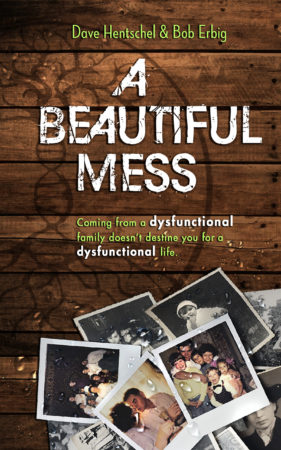
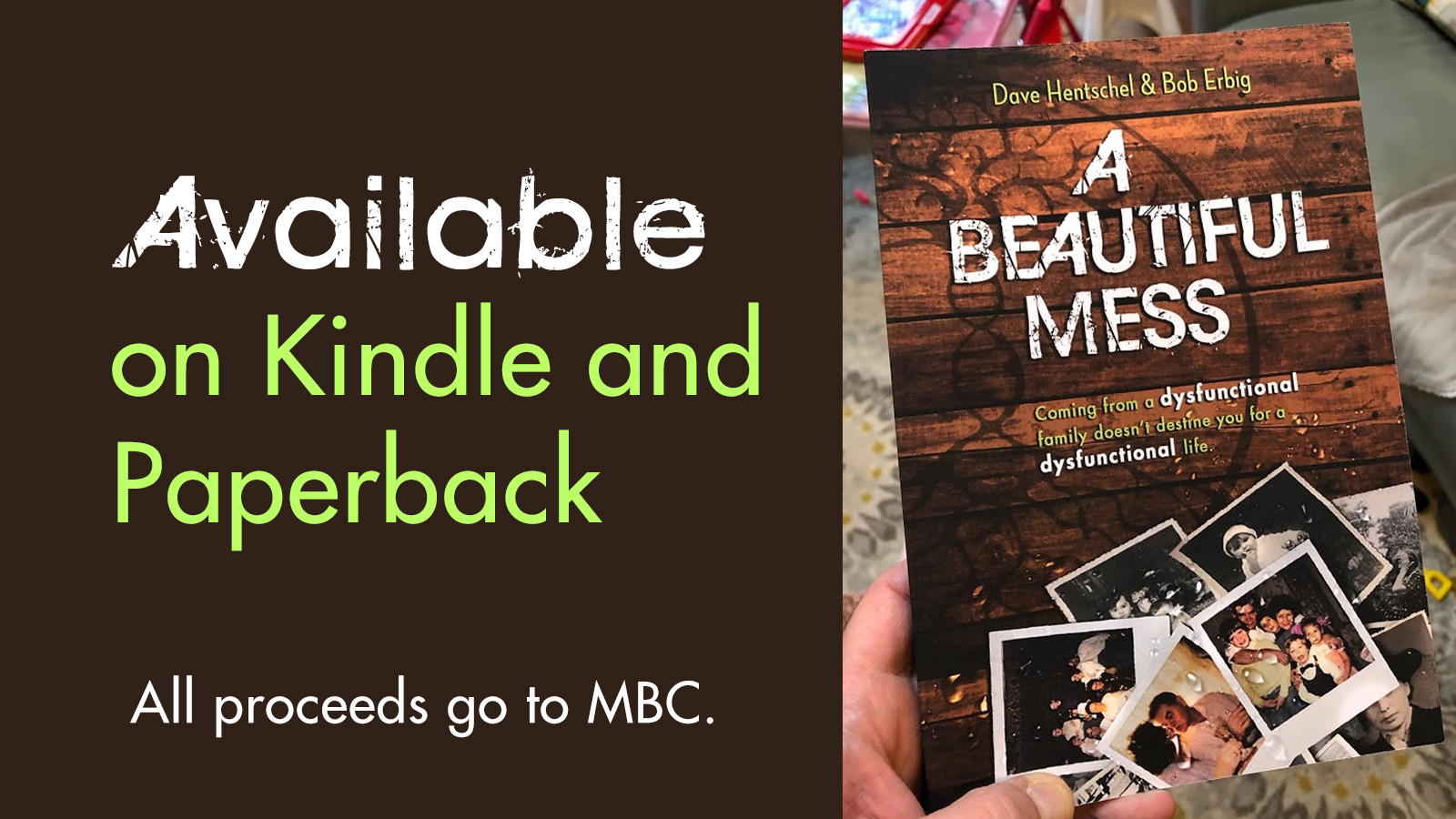
We are excited to announce our new book! Now available on Kindle and in paperback, A Beautiful Mess: Coming from a dysfunctional family doesn’t destine you for a dysfunctional life. 

Family. This group of people has so much power over us. Our familial experiences forever shape our lives. Truth be told, family can be a source of life-giving joy. Family can also be a source of palpable pain that leaves us angry, confused and unable to move on. And yet… when we search the pages of the Scriptures… we see that families are building blocks of society. In fact, God brought about redemption through a family. In the midst of pain and brokenness, God promises healing through adoption into a new family with him as our heavenly father. In this book, we journey through the biblical account of Genesis addressing challenges facing every one of our families. These challenges make us who we are. But even in the mess of family dysfunction, God can make something beautiful … through the power of the Gospel!

This book is based on a sermon series we preached through the book of Genesis in the Spring of 2019 but has a ton of new content including sections on Addressing the Mess with Boundaries, Addressing the Mess of Addiction and Addressing the Mess caused by Trauma. Check it out!

All proceeds from the purchase of this book go to MBC.

Welcome to the Pastor’s Table

Welcome to The Pastor’s Table, our MBC church blog. As the pastors and leaders of MBC, our vision is to “Expand the Table … for the Glory of God.” We are passionate about loving Jesus, loving people, and extending an invitation to everyone God’s table.


This blog is our invitation to you to pull up a seat and have a conversation with us. Here you will find theological musings, ministry updates and pastoral encouragement for our church body and for our broader community.

Whether you are a Christian or just someone seeking truth and answers about God, we welcome you here to take a seat at our table. We hope our blog will inspire, encourage you and challenge you while you sit with us at the table.