Sown in Weakness, Raised in Power (1 Cor 15:35-58)

On December 23, 2025, Ben Sasse posted something that stopped me cold. The former senator, just turned 54, announced on social media that he had been diagnosed with stage-four pancreatic cancer. He wrote with devastating clarity: he was going to die. But then he said something I haven’t been able to shake. He pointed out that, in a sense, he already had a death sentence before the diagnosis—and so do all of us.

That kind of honesty is rare. And for those of us who know Ben Sasse as a fellow believer in Christ, it was more than sobering—it was a window into what resurrection hope actually looks like when it’s tested.

In a moving interview with theologian Michael Horton, Sasse described his situation without flinching. His torso is filled with tumors. He is poisoning himself with chemotherapy, hoping it kills the cancer before it kills him. And yet, in that same interview, he and Horton found themselves laughing. Not to avoid the weight of it. But because, as Sasse put it, they understood that the “sting” is real—but the victory has already been won. That’s what he called gallows humor. A gallows, if you didn’t know, is a wooden frame built for hanging. They laughed because they know something death doesn’t know.

That interview became a living sermon illustration for me as I closed out our eight-week series, Upside Down Glory: Disability and the Kingdom of God. We’ve been asking hard questions all winter—about bodies, about dignity, about who the church is for. And this final week, Paul pushed us all the way to the end of the story: what happens to the body that has suffered?

Savor the Seed

In 1 Corinthians 15, Paul takes a simple farming image and does profound theological work with it. You don’t plant an oak tree—you plant an acorn. The acorn has to go into the ground and die before the oak tree can come up. What goes in does not look like what comes out. But here is Paul’s crucial point: to each seed, its own body. The oak comes from that particular acorn. There is continuity even in the transformation.

That’s where I spent some time on this passage: the resurrection body is not a generic replacement. God does not hand out standard-issue eternal bodies. He raises you—the specific person He has been shaping through every experience of your life.

Joni Eareckson Tada has written and spoken about this with more theological depth than almost anyone I know. She does not expect to be ‘fixed’ in the sense that her wheelchair years are erased like a mistake. She expects to be freed—and to be more herself than she has ever been. Her wheelchair-formed character, the depth of dependence and empathy she carries, is part of who she is. Resurrection does not erase that. It glorifies it.

Savor the seed. God is doing something in your story right now that you cannot see yet. Don’t disregard the acorn.

Shake Off the Dust

Paul moves from the seed analogy to four stark contrasts: perishable and imperishable. Dishonor and glory. Weakness and power. Natural body and spiritual body. These are not just poetic categories—each one speaks directly to the experience of people living with disability, disease, and limitation.

The word Paul uses for dishonor—atimia—means social shame, low status, being treated without value. We’ve talked all series about how people with disabilities can be made to feel this way. But the resurrection body is raised in glory. All the exclusion, pity, and dismissal of this world will be reversed.

And here is where I want to be careful, because how we answer this question says something about how we view people with disabilities right now: Will disabilities be present in the resurrection body? My conviction is that the resurrection body will be transformed, not just restored. Isaiah promises that the blind will see and the lame will leap. I take that literally. But—and this matters—transformation is not erasure. The disability will be gone, but the person will not. The years of dependence that deepened someone’s faith? That goes with them, glorified. The patience and trust forged through limitation? God does not throw that away. He perfects it.

When the acorn becomes the oak tree, the acorn is gone—but everything the acorn was is now fully expressed in something magnificent. The disability was the shell. The person inside is the oak tree God always intended.

So will my son Josiah be healed? Yes. Will he still be Josiah—joyful, excited about people, clapping his hands? Absolutely. More himself than he has ever been. That is not a contradiction. That is resurrection.

Listen for the Trumpet

Paul saves his best line for last: in a moment, in the twinkling of an eye, at the last trumpet—we will be changed. Notice the passive voice. The transformation is done to us, not achieved by us. You do not have to fight your way to a resurrection body. God will give it to you.

This word is for anyone who has been fighting for someone who couldn’t fight for themselves. If you’ve navigated the IEP meetings, sat in the hospital waiting room, rearranged your retirement and your sleep—you know what ‘groaning’ means in Romans 8. This is for you. The trumpet is coming. And at that sound, death will have no more authority. As Paul writes—and I love this—Death, where is your sting?

That is the gallows humor Ben Sasse and Michael Horton were laughing about. They know something death doesn’t know. Because Jesus died and was raised, so will we. And when that day comes, we will be more alive than we have ever been.

Therefore

After 57 verses of resurrection theology, Paul does not say: now you may sit and wait. He says: therefore—be steadfast, immovable, always abounding in the work of the Lord, knowing that your labor is not in vain.

This is the word I want to leave with you. If you are living with disability, if you are a caregiver, if you are a parent who exhausts yourself advocating for your child—God sees you. Your labor is not in vain. The work you are doing to bring heaven to earth matters. It will not be forgotten.

And to the broader church: the gates of the new Jerusalem, John tells us, will never shut. There will be no hour when access is denied, no barrier that says ‘not you.’ We have an opportunity right now to practice for the city that is coming. Open the doors a little wider. Lower the barriers a little further. Make room for the people the world has been telling to wait outside.

One day, there will be no night. The gates will never close. And the city will be absolutely full of people the world overlooked.

Sown in weakness. Raised in power. That is the promise. That is the hope. And that is the call.

*******************************************************

4-Day Bible Reading Plan

Based on “Sown in Weakness, Raised in Power” — 1 Corinthians 15:35–58

Day 1: The Seed Must Die — Continuity and Transformation

Passages: 1 Corinthians 15:35–44 | John 12:23–26

Focus: Paul’s seed analogy and the nature of the resurrection body

Reflection Questions:

  • What does the image of a seed teach you about how God views your present circumstances and limitations?
  • In John 12, Jesus applies this same seed language to his own death. What does this tell you about the path to glory?
  • Where in your life right now is God asking you to trust him with something that looks small or broken?

Prayer Focus: Ask God to help you savor the seed—to trust that He is doing something in your story you cannot yet see.


Day 2: Sown in Dishonor, Raised in Glory — Dignity and the Resurrection

Passages: 1 Corinthians 15:42–49 | Isaiah 35:1–10 | Psalm 8:1–9

Focus: The four contrasts of resurrection and the dignity of every body

Reflection Questions:

  • Paul contrasts dishonor with glory, and weakness with power. Where do you see people dishonored or treated as less than in your community? In your church?
  • Isaiah 35 describes blind eyes opening and lame people leaping. How does this promise shape the way we should treat people with disabilities today?
  • What does it mean that your identity is found not in your circumstances, but in the image you were made to bear?

Prayer Focus: Pray for someone in your life who has been overlooked or made to feel less than. Ask God to help your church become a place that reflects resurrection dignity.


Day 3: The Dust and the Second Adam — Our Identity in Christ

Passages: 1 Corinthians 15:45–49 | Genesis 2:4–7 | Romans 5:12–21

Focus: The narrative arc from the first Adam to the last Adam

Reflection Questions:

  • Paul traces the story from Adam (dust) to Christ (life-giving Spirit). How does understanding this arc change the way you think about your own mortality?
  • In Romans 5, Paul describes how the second Adam undoes what the first Adam introduced. What does it mean to you personally that Christ came to reverse the curse?
  • We are all people of the dust—bearing the weight of fallen embodiment. Where are you most aware of that weight right now?

Prayer Focus: Thank God for the Second Adam. Pray to bear the image of the man of heaven more fully today.


Day 4: Listen for the Trumpet — Resurrection Produces Action

Passages: 1 Corinthians 15:50–58 | Revelation 21:1–5, 25 | Romans 8:18–25

Focus: The promise of transformation and the call to labor

Reflection Questions:

  • Paul says the transformation is done to us, not achieved by us. How does that bring comfort—especially to those who are weary from caring for others?
  • The gates of the new Jerusalem never shut (Rev. 21:25). What barriers—physical, cultural, attitudinal—in your church still need to come down?
  • Paul’s “therefore” in v. 58 is a call to action rooted in resurrection hope. What is one concrete step you can take this week to bring heaven to earth for someone impacted by disability?

Prayer Focus: Ask God to give you ears to hear the trumpet in the distance—and the courage to live toward it now. Pray for steadfastness and ask: Lord, where are you calling me to labor?

************************************************************

This reading plan is part of the “Upside Down Glory: Disability and the Kingdom of God” sermon series at Millington Baptist Church.

The Canvas of Glory: Why Does God Allow Disability?

Why would God do this? Did we do something wrong?

My wife whispered these words through tears as we sat in our car after a 16-week ultrasound revealed skeletal malformations in our unborn son. After years of trying, multiple miscarriages, and finally the joy of pregnancy—why would God allow this?

It was in that raw moment that the Spirit brought John 9:3 to my mind: “It was not that this man sinned, or his parents, but that the works of God might be displayed in him.”

This happened so that he could be a canvas for God’s glory.

A Tale of Two Pools

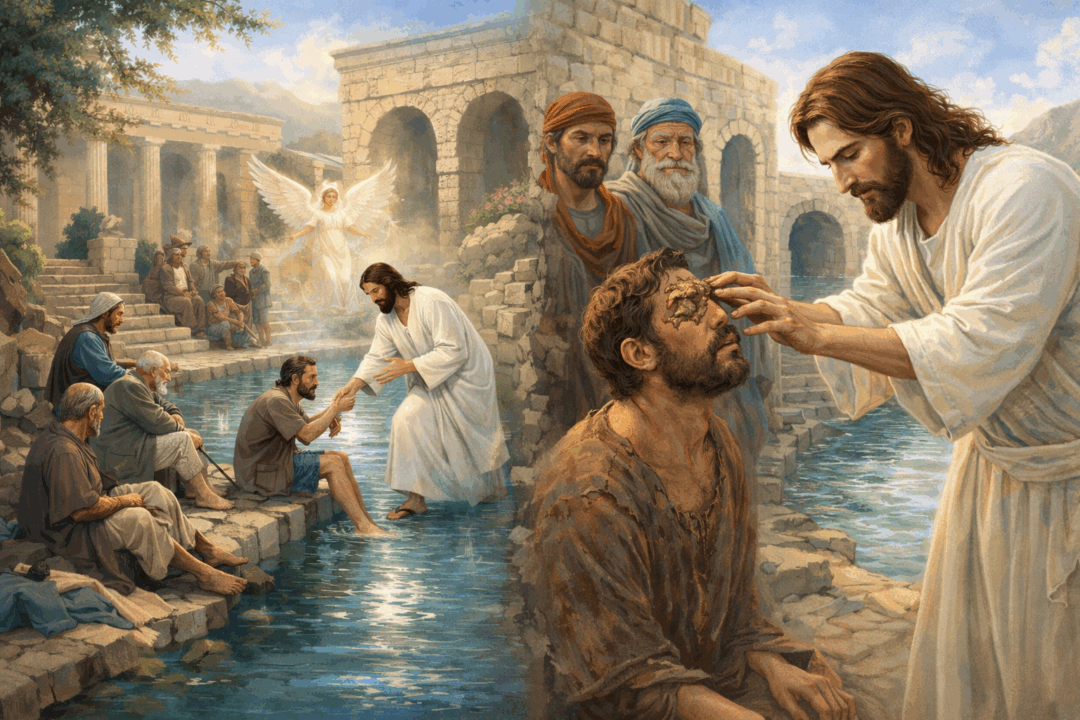
John’s Gospel gives us two healing stories that address our deepest questions about suffering. At the Pool of Bethesda, we meet a man sick for 38 years—lying in the “House of Mercy,” yet experiencing none. Jesus asks him: “Do you want to be healed?”

It seems obvious. But Jesus’ question cuts deeper than physical restoration. He’s asking: Do you see me for who I truly am?

When we encounter disability, our response opens a window to our soul—revealing our desires and exposing our relationship with God.

At the Pool of Siloam, we find Jesus with a man born blind. His disciples ask the question that haunts every family touched by disability: “Rabbi, who sinned, this man or his parents, that he was born blind?”

The assumption behind their question was common in first-century Israel: disability equals divine punishment. Someone must be at fault. And honestly? This assumption persists today.

But Jesus turns their thinking upside down: “It was not that this man sinned, or his parents, but that the works of God might be displayed in him.”

From “Why?” to “What Now?”

Here’s the fundamental reorientation Jesus offers: Stop looking for answers in past causes and start looking for future purposes. The question is not “Why did this happen to him?” but rather “What will God accomplish through him?”

When my wife and I sat in that car after our ultrasound, we encountered a fork in the road. We started with the first question—Why did this happen? And I suspect many of you have been there, weeping, wondering. I want you to know: that’s natural. It’s okay to start there.

But I also want to challenge you not to stay there.

As painful as it might be, ask God to help you move to the second question: What will God accomplish through this?

That path leads to surrender. It won’t be easy—but God will get the glory.

My son Josiah’s life has been exactly that. There were times we didn’t think he would survive—but he did, because the church prayed. He required a bone marrow transplant at 11 months old—but he survived, because the church prayed. And God received the glory.

It has not been easy. Yet God has built resilience I never thought possible. He has drawn us close in prayer and developed tender hearts in our daughters. Every time we weren’t sure we would make it—he has always provided.

Jesus Sees, Jesus Restores, Jesus Sends

Notice what Jesus does. At Bethesda, he “sees” the man the world overlooks. He knows the man has waited “a long time.” People with disabilities understand this—the waiting for others to notice, the patience required, the endless hours in doctors’ offices.

Jesus knows about our “long time.”

At Siloam, Jesus doesn’t just heal—he re-creates. When he makes mud with his saliva, John uses the same Greek word (pelos) found in Genesis 2:7 describing Adam’s formation. This is new creation imagery. And the pool’s name—Siloam, meaning “Sent”—embodies Jesus’ identity as the one sent from the Father.

The man washed and came back seeing. For the first time in his life, his eyes were open—and he saw Jesus, the one who healed him.

Our Calling

Why does this matter? Because Jesus sees the overlooked, restores the forgotten, and sends his church to do the same.

Modern pools of Bethesda exist all around us—emergency rooms, care facilities, educational systems with waitlists. Sometimes even churches can leave people isolated while they wait for the water to stir.

We cannot be the full body of Christ without those with disabilities. They have so much to teach us. We cannot leave them at the pool—we must bring them to Jesus, the Light of the World.

So let me leave you with two questions: When you encounter disability, it’s natural to ask, Why would God do this? But I also want to challenge you to ask, What will God accomplish through this?

God hasn’t forgotten you. He wants to bring you to a place of surrender—and then he will use you for his glory. As you walk with him, like the blind man, he will open your eyes to see.

My son Josiah smiles, runs, and lights up when I come home. He gives hugs. He has joy. And by God’s grace, with many more years to go, he will be a canvas for God’s glory.

Jesus sees the overlooked, restores the forgotten, and sends his church to do the same.


4-Day Scripture Reading Plan: The Canvas of Glory

Day 1: Seen by Jesus
John 5:1-15
Jesus sees those the world overlooks. Reflect on areas where you feel invisible or forgotten, and ask Jesus to meet you there.

Day 2: Purpose Over Punishment
John 9:1-12
Disability and suffering are not divine punishment—they’re opportunities for God’s glory. Ask God to shift your perspective from “Why?” to “What will you accomplish?”

Day 3: Light in Darkness
John 9:13-41
The healed man boldly testified despite opposition. Consider how your own story of God’s faithfulness can encourage others.

Day 4: Sent to See
John 7:37-39; 9:4-7
Jesus is the Living Water and the Light of the World—and he sends us to bring others to him. Pray for eyes to see those waiting at the pool and courage to bring them to Jesus.

ADVOCACY: Faith That Breaks The Roof (Mk 2:1-12)

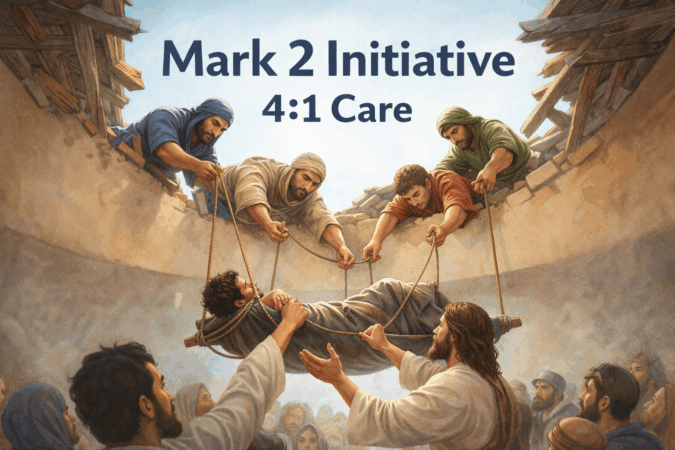
And they came, bringing to him a paralytic carried by four men. And when they could not get near him because of the crowd, they removed the roof above him, and when they had made an opening, they let down the bed on which the paralytic lay. — Mark 2:3-4, ESV

I want to talk about advocacy—advocating for those with disabilities. We live in a culture that talks a lot about “quality of life,” but too often that phrase hides a painful truth: we are calculating a person’s worth.

That mindset shows up in a place many families know all too well—the genetic counseling room. Genetic counseling has become a routine part of pregnancy. You sit down with a counselor, they walk you through a list of tests, and you’re told what each one can reveal. I’ll be honest—when Amanda and I found ourselves in that room, we hadn’t given this much thought. The church had never talked about it from a biblical worldview. So we just did what was suggested.

Have you encountered this scenario? For some, it’s very personal. That experience planted a pastoral concern deep in my heart. And the truth is, the pressure in that room is real.

When a couple receives a prenatal diagnosis—say, Down syndrome—the patterns are sobering. Studies show that 67% to 90% of affected pregnancies end in termination. Parents often describe feeling pressured toward termination. Many are told their child will “suffer” or their family will be “burdened.” And when termination is presented as the default option, continuing the pregnancy becomes the one that needs defending.

So here’s the question we must confront: Who decided these lives aren’t worthy?

The Barrier at the Door

In Mark 2, Jesus returns to Capernaum—a fishing town that became his base of operations. The crowd that day was massive—standing room only. Mark 2:2 says, “There was no more room … not even at the door.”

For many in our community living with disabilities, “no room” isn’t just a moment—it’s a pattern. A student with a learning difference can’t get basic school accommodations. A handicap parking spot is encroached upon. A front entry has steps and no ramp. “No room” is a familiar refrain. And when we don’t notice it, the barrier stays.

“And they came, bringing to him a paralytic carried by four men.” That’s the one detail Mark gives us. Not their names. Not their jobs. Just what they did: they carried him. Mark doesn’t tell us who they were; he tells us what they did.

So let me ask you: What would motivate you to carry him? Would you lift the mat and bring him to Jesus … or look away?

The people at the door didn’t move. Their attitude? “How dare this disabled man try to get in.” The crowd did not make room; they stood in the way. All he wanted was to get to Jesus—but he couldn’t.

The four chose another way: If you can’t get through the door—you go through the roof.

The Barrier in the Heart

Once they got inside, there was another barrier—one even more damaging than the crowd at the door: the barrier in the heart.

Heart barriers are invisible, yet they quietly determine how we respond to disability. They tell us who is worth the effort, who makes us uncomfortable, and who we assume someone else will take care of. There’s an empty seat in the room—not because anyone is cruel, but because everyone has a reason. “I don’t know what to say.” “I wouldn’t know how to help.” And the person with a disability is left outside—not by rejection, but by hesitation.

When we tie dignity to ability, we don’t just create a social barrier—we make a theological mistake. We turn the Image of God into a “quality of life” score.

And when Jesus saw their faith, he said to the paralytic, “Son, your sins are forgiven.”

Watch what Jesus does first. He notices him. Jesus looks at this man and says, “Son”—family language, belonging language. He welcomes a person made in God’s image into the family circle—right there on the mat, before a single step is taken. Then He addresses his deepest need first. Before any physical restoration, Jesus offers forgiveness.

That order matters. Dignity before ability. Belonging before healing.

Many believed disability was a sign of divine judgment. When Jesus says, “Son, your sins are forgiven,” He is not suggesting this man’s disability was caused by sin—He is dismantling the stigma. He declares that this man has full access to God exactly as he is—lying on his mat, before taking a single step.

Who Decides?

Who decides which lives are worthy of access, dignity, and belonging?

Not genetic counselors. Not insurance companies. Not cultural trends. Not convenience. Not fear.

Jesus decides. And He says: every life—from conception through natural death, with disability or without—bears God’s image and deserves our advocacy.

When prenatal screening becomes prenatal elimination, we are reenacting the same barrier the scribes erected in Mark 2: “This person doesn’t belong. This life isn’t worthy.” It is the modern equivalent of standing in the doorway and refusing to make room.

But our pro-life ethic cannot stop at birth. If we believe every human life bears God’s image and has intrinsic worth, then we must believe that regardless of ability: every child conceived is created in God’s image, God doesn’t make mistakes when He forms a person, and Jesus’ ministry consistently showed that disability never disqualifies someone from His presence, His love, or His purposes.

Take the Roof Off

Ask God to show you one person who is facing a barrier—physical, social, emotional, or spiritual—and take one concrete step this week to “break the roof” for them so they can get closer to Jesus.

Not four things. Just one: See the barrier. Step toward them. Remove something that’s in their way.

Disability ministry is a corporate responsibility, not an individual burden.

Picture those four friends: dust falling from the roof, shocked faces, the audacity to take the roof off just to get their friend to Jesus. They didn’t ask permission. They didn’t wait for a better time. They saw their friend. They saw the barrier. They saw Jesus—and refused to let anything separate the three.

That’s advocacy. That’s our call.

Who will you advocate for this week? What barrier will you help tear down?

The roof is waiting.

___________________________________________________________________________________________________

A Four-Day Bible Reading Plan

Day 1: The Four Who Carried

Read: Mark 2:1-12

Reflect: Who in your life is facing a barrier they cannot remove alone? What would it look like for you to be one of the four?

Day 2: Made in His Image

Read: Genesis 1:26-27; Psalm 139:13-16

Reflect: How does grounding human worth in the image of God—rather than ability—change how you see others? How you see yourself?

Day 3: A Canvas for Glory

Read: John 9:1-7

Reflect: Where have you seen assumptions about disability that mirror the disciples’ question? How does Jesus’ answer reshape your thinking?

Day 4: The Body That Carries

Read: 1 Corinthians 12:12-26

Reflect: What barrier could your community remove this week so that someone can get closer to Jesus? Who will you carry?


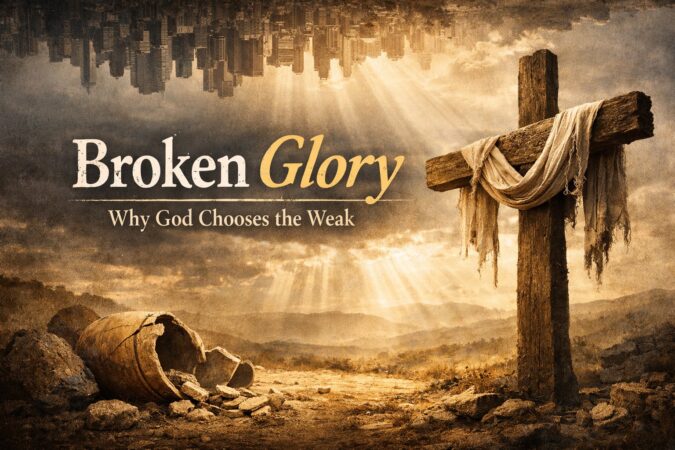
Broken Glory: Why God Chooses The Weak

The Problem with New Year’s Resolutions

Every January, we make resolutions with the same underlying assumption: something in us needs fixing before we’re useful. We resolve to be smarter, stronger, healthier, more financially secure. None of those goals are wrong—but they reveal something about us. We are catechized by a story that says strength is the goal and weakness is the problem.

What if that story is wrong?

What if the very weaknesses we’re trying to eliminate are the places God intends to display His glory most clearly?

Our culture is obsessed with competence. We celebrate productivity, independence, and self-sufficiency. Weakness—especially visible weakness—makes us uncomfortable. Disability, limitation, dependence… these are things we’d rather manage quietly or avoid altogether.

Even in the church, we can subtly absorb these values. We talk about grace, but live as if God works best through the capable. We imagine God will use us more once we’re healthier, less overwhelmed, or finally “put together.”

But Scripture confronts that assumption head-on.

Good Chooses the Weak to Shame the Strong

The Apostle Paul writes words that dismantle our strength-based instincts:

“But God chose what is foolish in the world to shame the wise; God chose what is weak in the world to shame the strong; God chose what is low and despised in the world, even things that are not, to bring to nothing things that are.”
(1 Corinthians 1:27–28)

Paul reminds the Corinthian church—and us—to consider our calling. God did not wait for His people to become impressive. He did not choose them because of wisdom, power, or status. He called them as they were.

And that is the point.

God’s Kingdom operates on an upside-down value system. Weakness is not an obstacle to His purposes—it is often the instrument. The cross itself is proof. Jesus did not conquer through dominance but through surrender. Divine power was revealed through human frailty.

This truth reshapes how we see disability. Disability is not a loss of humanity. It is a form of human experience within a broken creation—one in which God’s image remains fully present and God’s grace is powerfully displayed.

Scripture affirms that every person bears the image of God. That image is not measured by intellect, productivity, independence, or physical ability. To be human is to bear it. And because of that, every life is worthy of honor.

Do You Truly See?

For me, this became personal when my son Josiah was born with a rare genetic condition. Until then, I was aware of disability—but I didn’t truly see it. God used my son’s life to expose how shallow my instincts about strength really were.

Josiah has taught me what joy looks like. What dependence looks like. What unfiltered worship looks like.

And I’ve learned this: people the world calls “weak” often become the clearest witnesses to God’s strength.

But honoring the image of God requires more than agreement—it requires attention. Avoidance rarely looks like cruelty. More often, it looks like distance. It looks like looking away, staying silent, assuming someone else will step in.

What we fail to see, we fail to honor.

Three Invitations:

Paul tells us why God works this way: “so that no human being might boast in the presence of God.” Weakness levels the ground. It exposes our pride. It redirects our confidence.

So here’s the challenge:

  • Lean into your own limitations instead of hiding them.

  • Learn from people whose lives are shaped by disability or dependence.

  • Look again at those you might normally overlook.

Because our limitations are not barriers to God’s glory—they are the stage for it.

And in a world obsessed with strength, may we learn to boast in the Lord alone.


4-Day Scripture Reading Plan

Day 1: 1 Corinthians 1:26–31
Reflect on how God redefines wisdom, strength, and worth.

Day 2: Jeremiah 9:23–24
Consider what it means to boast in knowing the Lord rather than in human ability.

Day 3: Genesis 1:26–27 & James 3:8–10
Meditate on the image of God and its implications for human dignity.

Day 4: 2 Corinthians 12:7–10
Sit with the truth that God’s power is made perfect in weakness.

Blog Post: The World God Intended (Isa 65:17)

For behold, I create new heavens and a new earth, and the former things shall not be remembered or come into mind.” (Isaiah 65:17)

Isaiah 65:17 invites us to lift our eyes beyond repair and toward re-creation. God does not merely promise to improve what is broken; He declares that He is creating something altogether new. The language is intentional and echoes Genesis. Just as God once spoke light into darkness, He promises to speak a renewed world into existence, one so transformed that “the former things shall not be remembered or come into mind.”

This verse confronts our instinct to cling to the past. We often imagine redemption as God restoring what we lost: old joys, old stability, old versions of ourselves. But Isaiah tells us that God’s future is not a rewind button. It is a reset of a deeper kind. The pain, injustice, and grief that have shaped our memories will not define our eternity. They will not even haunt it. God’s promise is not amnesia, but healing so complete that sorrow loses its power to dominate our consciousness.

For Isaiah’s original audience, exiles, weary from judgment and displacement, this promise would have sounded almost too good to be true. Their world had collapsed politically, socially, and spiritually. Yet God does not offer them a slightly improved Jerusalem or a safer version of their old life. He offers a new creation in which joy replaces despair and peace eclipses fear. The scope of God’s promise matches the depth of their loss.

For Christians, Isaiah 65:17 points forward to the hope fulfilled in Christ and consummated at His return. The New Testament echoes this promise when Revelation declares,

“Behold, I am making all things new” (Rev. 21:5).

In Jesus’ resurrection, the new creation has already begun. The future has broken into the present. While we still live amid groaning and decay, we belong to a story that is heading toward renewal, not ruin.

This verse also shapes how we live now. If God’s future is truly new, then our present suffering is not ultimate. Regret does not get the final word. Neither do failures, losses, or unresolved grief. Isaiah 65:17 gives believers courage to endure, knowing that what weighs heaviest on our hearts today will not define our tomorrow.

God’s promise frees us to live with hope rather than nostalgia and with faith rather than fear.

Isaiah’s call to “behold” is a summons to trust. God asks us to fix our attention not on what is fading, but on what He is creating. Even now, He is at work, quietly, powerfully preparing a world where joy is unbroken and sorrow is no more. Until that day, we live as people shaped by the future, confident that the God who makes all things new will finish what He has begun.

The Reset we Need (Isaiah 61)

The Reset we Need (Isaiah 61)

By David Hentschel

Have you ever wished life came with a reset button? Maybe you’ve experienced the frustration of a broken appliance, a car that won’t start, or a computer frozen mid-task. You fiddle, troubleshoot, maybe even bang it a little in frustration, until—finally—you find that elusive button that clears the glitches and brings everything back to working order. In life, we long for that kind of reset too. When our hearts are weary, our circumstances feel hopeless, or our past mistakes weigh us down, we yearn for a fresh start.

Isaiah 61 speaks directly to this longing. It’s a chapter filled with hope, restoration, and the promise of God’s transformative work. Here, the prophet announces the arrival of the Messiah, the One sent to bring freedom, healing, and renewal. He declares, “The Spirit of the Lord God is upon me, because the Lord has anointed me to bring good news to the poor…to bind up the brokenhearted…to comfort all who mourn” (Isaiah 61:1-2). These words were first spoken in anticipation of Jesus, and they still speak to us today: the reset we need is found in Him.

Our sin, regret, grief, and disappointment accumulate over time. We try to fix ourselves, yet nothing seems to work. Isaiah 61 reminds us that God offers a reset far beyond what we can achieve on our own. He does not simply patch over our problems—He restores, renews, and transforms. Notice the verbs in Isaiah 61: the Messiah binds, proclaims, comforts, gives, rebuilds. Each of these actions is an invitation to a fresh start.

This is the kind of reset no human effort can achieve. It’s complete, thorough, and initiated by God Himself.

Why We Need the Reset

Life is full of accumulation—years of habits, habits of thought, moments of failure, and seasons of grief. Without intervention, these build up into patterns that trap us. That’s why God’s reset is necessary. In the same way that after decades of corruption the world required a flood, our hearts sometimes reach a point where only God’s intervention can bring renewal.

Like a device with too many glitches, we sometimes need to let go of our attempts at self-fix. Our pride, self-reliance, or desire for control can keep us stuck in cycles of guilt, bitterness, or anxiety. Isaiah 61 reminds us that the reset button isn’t found in our own strength—it’s found in God’s Spirit working through the Messiah.

How to Press the Reset Button

So how do we experience this divine reset? There are a few key steps:

  1. Acknowledge the need – Just as we cannot fix a machine without recognizing it is broken, we cannot receive God’s restoration until we admit our need. Confess your struggles, your failures, and your wounds to Him.
  2. Turn to the One Anointed – Jesus fulfills Isaiah 61. He is the reset button for our lives. When we trust Him, we are no longer bound by past failures or present fears.
  3. Receive His work in your life – God doesn’t merely give advice; He actively works to restore and rebuild. This might look like forgiveness where you expected guilt, peace where there was anxiety, or hope where there was despair.
  4. Step into your new life – A reset is not only internal; it transforms how we live. Isaiah 61:3 promises “the garment of praise for the spirit of heaviness.” When we embrace God’s restoration, it should be visible in joy, gratitude, and acts of service.

Living with the Reset Mindset

Pressing the reset button is not always a one-time event. Life continually challenges us, and sometimes we need repeated resets—daily surrender, regular repentance, and ongoing trust. But each reset is a reminder of God’s faithfulness and the hope He brings.

Isaiah 61 concludes with a vision of full restoration: “They shall build up the ancient ruins; they shall raise up the former devastations; they shall repair the ruined cities…so that they may possess the land” (v.4). This isn’t just about personal restoration; it’s about God redeeming our circumstances and using our renewed lives to impact the world around us. The reset isn’t just for us—it’s for God’s glory and the flourishing of His kingdom.

A Word of Encouragement

If you are reading this and feel weary, broken, or trapped in the past, remember that the reset button is within reach. God has already acted through Christ to bring forgiveness, healing, and new beginnings. You don’t have to wait for everything to be perfect or for your own strength to catch up. The Spirit of the Lord is upon you, inviting you into restoration.

Press the reset. Allow Him to bind your wounds, lift your burdens, and rebuild your life. And as you walk in His restoration, let your life proclaim the good news of God’s redeeming love.

The Fast God Chooses (Isa 58:6)

The Fast God Chooses (Isa 58:6)

By David Hentschel

“Is not this the fast that I choose: to loose the bonds of wickedness, to undo the straps of the yoke, to let the oppressed go free, and to break every yoke?” (Isaiah 58:6)

God’s idea of faithfulness often disrupts ours. In Isaiah 58, the people are fasting, praying, and seeking God—yet something is profoundly wrong. Their religious devotion is impressive on the outside but hollow at the center. So God speaks plainly: this is the fast I choose.

True worship does not terminate on ourselves. It bends outward. God’s chosen fast loosens what sin tightens, frees what injustice binds, and breaks yokes that crush image-bearers. The verse is not a rejection of spiritual disciplines, but a redefinition of them. Fasting that pleases God is not merely abstaining from food; it is participating in His redemptive work in the world.

Isaiah 58:6 reminds us that righteousness is not performative but restorative. God is not impressed by religious activity that leaves oppression untouched. He delights in hearts so aligned with His own that worship spills over into mercy, justice, and compassion.

The question this verse leaves us with is simple and searching: Does our devotion reflect the freedom-bringing heart of God? The fast He chooses still calls us to examine not just what we give up—but who we lift up.

The Price of Peace: Why Surrender Is the Only Way (Isa 52:13-53:12)

The Great Exchange

The Price of Peace: Why Surrender Is the Only Way

“But he was pierced for our transgressions; he was crushed for our iniquities; upon him was the chastisement that brought us peace, and with his wounds we are healed.”Isaiah 53:5

We live in a world obsessed with deals. From business contracts to ceasefire agreements, negotiation feels like the path to peace. But Isaiah 53:5 shatters that illusion. When it comes to peace with God, there is no bargaining table. There is only surrender.

The Illusion of Negotiation

If we’re honest, most of us try to negotiate with God. We think, “If I live a good life, if I serve, if I give—surely God will cut me a break.” We cling to leverage like a soldier clutching his rifle after the war is over. The treaty is signed, the battle is done, but we won’t let go—because surrender feels risky.

But Isaiah says peace doesn’t come through leverage. It comes through a costly act of love: “He was pierced for our transgressions… crushed for our iniquities.” Jesus didn’t haggle for a better deal. He absorbed the full weight of our rebellion so that we could be free. The chastisement that brought us peace fell on Him. His wounds healed us.

The Painful Price

The language Isaiah uses is brutal: pierced, crushed, chastised. This isn’t poetic exaggeration—it’s the reality of the cross. Jesus endured nails through His hands and feet, a spear in His side, and lashes that tore His flesh. Why? Because sin isn’t a minor infraction; it’s cosmic treason. It fractures our relationship with God and demands justice.

John Oswalt writes, “Rebellion disrupts relationship and offends justice… only when justice is satisfied and authority acknowledged can true peace—shalom—be achieved.”[1] Jesus satisfied justice and acknowledged God’s authority—not by demanding payment from us, but by paying the price Himself. That’s grace. That’s the Gospel.

Why Do We Resist?

If peace is offered freely, why do we reject it? Isaiah gives the answer in the very next verse: “All we like sheep have gone astray; we have turned—every one—to his own way.” (Isa 53:6) We want peace on our terms. We want forgiveness without obedience, blessings without surrender. But as long as we grip our weapons—pride, control, self-righteousness—the war continues.

Application: Lay Your Weapons Down

So let me ask: Why are you still fighting? Maybe you’re a Christian, but there are corners of your heart where you say, “God, can’t I just rule this one area?” That’s negotiation talk. And negotiation keeps us from peace.

Or maybe you’re exploring faith and wondering, “What does God want from me?” Here’s the answer: He wants your surrender. Not because He’s a tyrant, but because He’s a Savior. The war is over. The price is paid. Peace is yours—if you’ll lay down your weapons.

Picture this: Russia and Ukraine have been locked in a bitter war. Imagine a peace agreement offered—not because one side won, but because someone stepped in and paid the price to end the conflict. But peace can’t begin until both sides drop their guns. That’s where some of us are spiritually. The treaty is signed in Jesus’ blood, but we’re still clutching our pride and excuses.

Will You Surrender Today?

Isaiah 53:5 is the peace plan for the ages. Jesus was pierced so you could be forgiven, crushed so you could be healed, chastised so you could know peace. The question isn’t whether peace is available—it’s whether you’ll receive it.

So take a moment and pray:
Father, today I lay down my weapons. I confess that I’ve fought for control and tried to earn peace on my own. Thank You for sending Jesus, who was pierced for my transgressions and crushed for my iniquities. I surrender all to You. Amen.

Peace with God doesn’t come through negotiation—it comes through surrender. Will you surrender today?

Reading Plan This Week

  • Day One: Isaiah 52
  • Day Two: Isaiah 53
  • Day Three: Isaiah 54
  • Day Four: Isaiah 55

********************************************************************************************************

[1] John N. Oswalt, The Book of Isaiah, Chapters 40–66, The New International Commentary on the Old Testament (Grand Rapids, MI: Wm. B. Eerdmans Publishing Co., 1998), 388.

“Here I Am! Send Me” Vision Sunday 2025


Here I Am—Send Me: A Vision for Generations

Isaiah 6:8 captures a defining moment:
“Whom shall I send, and who will go for us?” And I said, ‘Here I am! Send me.’”

Isaiah’s response wasn’t cautious or conditional. He didn’t ask for details or guarantees. He simply said yes. That’s the posture God is calling us to today—not perfection, but availability. The question still echoes: “Whom shall I send?” Will we answer like Isaiah?

At Millington Baptist Church, we believe this call is urgent. The gospel is always one generation away from being forgotten. If we fail to pass the baton of faith, the race is lost. That’s why our vision—Firmly Planted. Growing Together. Made to Multiply—is more than a slogan. It’s a mission to root ourselves in God’s Word, grow in community, and multiply disciples locally and globally.

This year, we’ve seen God move in incredible ways: baptisms tripled, attendance surged, and ministries flourished. But the question remains—will we keep running faithfully? Will we prepare the next runner?

Saying “Here I am” means stepping into God’s mission with courage. For us, that includes tangible steps:

Investing in the Next Generation – Scholarships for teen retreats, worship resources for youth, and strengthening our preschool, Little Footprints Learning Center, so every child can encounter Jesus.

Creating Spaces for Growth – Expanding our parking lot to welcome more families, building a prayer garden to mark our 175th anniversary, and launching a book stall for curated biblical resources.

Equipping Disciples – This is at the heart of our vision. We’re launching a Discipleship Portal, an online platform designed to help every person grow spiritually and discover their unique gifts. Inside the portal, you’ll find personal profiles with spiritual gift assessments to help you serve where you’re most effective, growth tracks tailored for every stage of faith—from exploring Christianity to leading others, mentoring opportunities connecting seasoned believers with those just starting their journey, and learning resources including seminars like Walk Thru the Bible to deepen your understanding of Scripture. Our goal is simple: to move beyond attendance and into intentional spiritual formation. We want every person at MBC to know how God has wired them and to joyfully use their gifts for Kingdom impact.

Multiplying Globally and Locally – Partnering with WorldVenture for a missions conference, supporting projects in Senegal and Romania, and launching outreach initiatives to serve veterans, the homeless, and families through events like Summerfest.

Launching Disability Ministry – This is close to our heart. One in four individuals lives with some form of disability, many invisible. Our plan includes forming a Disability Leadership Team, starting a 5:1 Care Ministry to support families, and preaching an eight-week series called “Upside Down Glory”—celebrating how God uses weakness for His glory. We’ll partner with Joni and Friends to help us start strong.

These aren’t just programs—they’re opportunities to say, “Lord, send me.”

Isaiah’s words remind us: the race is short, and the baton is in our hands. Will you join us in this mission? Our end-of-year goal is to raise $375,000 to fuel these initiatives, but more than that, we need hearts surrendered to God’s call.

Let’s run faithfully—and pass the baton well.


Noise Cancelling Grace (Isa 49:1-13)

The 12 Best Noise-canceling Headphones for Travel [2023]

Noise-Cancelling Grace

If you’ve ever used noise-cancelling headphones, you know how magical they feel. You slip them on, tap a button, and suddenly the roar of the world fades into a quiet hum. But here’s the thing: those headphones don’t eliminate sound by creating silence—they create a counter-sound that cancels the chaos. It’s science… or magic… depending on how you look at it.

Lately, I’ve realized how much I need that kind of technology for my soul.

Because if we’re honest, every one of us carries internal noise. A running playlist of fears, insecurities, pressures, comparisons, regrets, and expectations. No one talks to you more than you talk to you—and many of us, if we could listen in, would discover that our internal soundtrack is anything but life-giving.

Isaiah 49 steps into that mental noise with something far more powerful than silence. It brings a song—the song of God’s Servant, a melody so strong it cancels the world’s static and replaces it with hope.

And it crescendos in this promise:

“Sing for joy, O heavens, and exult, O earth…
For the Lord has comforted His people
and will have compassion on His afflicted.”
—Isaiah 49:13

This is the anchor of the passage. God’s comfort. God’s compassion. God’s song breaking through our noise.

The World’s Noise vs. God’s Song

Isaiah describes people weighed down by exile, disappointment, and despair. Their world was loud. Their hearts were louder. Sound familiar?

We live in our own kind of exile—scrolling through bad news, drowning in self-critique, striving to perform, hustling to be noticed, and letting anxiety write our soundtrack for us. I called it in the sermon “a spiritual song battle”: the song of self vs. the song of surrender… the song of performance vs. the song of grace… the song of despair vs. the song of hope.

But Isaiah 49 introduces us to the Servant—Jesus—whose voice breaks through all competing melodies. He is the One called from the womb (v. 1), hidden until the right time (v. 2), sent to restore God’s people (v. 5), and appointed as “a light to the nations” (v. 6). He steps into our fractured playlists and provides a whole new score.

Where the world shouts, “Earn it,” His melody says, “It is finished.”
Where the world says, “Stay in your darkness,” He calls, “Come out.”
Where the world says, “This is all there is,” He declares, “Behold, I am making all things new.”

His song becomes the noise-cancelling grace our hearts desperately need.

The Servant’s Song Becomes Our Song

The beauty of Isaiah 49 is that it doesn’t stop with Jesus singing over His people. In verses 8–13, His people begin to sing with Him. His melody becomes our harmony. Mission is born. Hope spreads. Captives are freed. Exiles return home. Hungry souls are satisfied. Mountains become roads. People stream from the ends of the earth to the presence of God.

And it all leads to the explosion of worship in Isaiah 49:13.

Creation sings because God’s people have been comforted.
The afflicted rejoice because the Servant has spoken.
Heaven and earth resound with a melody stronger than despair.

That’s noise-cancelling grace.

So let me ask you: what’s playing in your headphones today?

If the world’s noise has been shaping your thoughts, tune your heart back to the Servant’s Song:

  • Put on the Gospel daily. Let Isaiah 49 be the first voice you hear.

  • Join the harmony. Share the hope you’ve received.

  • Sing boldly. Even when it’s unpopular.

  • Come out of the darkness. If you feel trapped, the Servant calls you by name.

The Noise-Cancelling Servant has already started the song.
Now it’s our turn to carry the harmony—
until the mountains themselves break forth into singing.

Because the Lord has comforted His people.
And He will have compassion on His afflicted. (Isaiah 49:13)

Let that be the loudest thing in your life today.

****************************************************************************************

Reading Plan This Week

  • Day One: Isaiah 49:1-7
  • Day Two Isaiah 49:8-13
  • Day Three: Isaiah 49:14-26
  • Day Four: Isaiah 50-51