The Glory of God and the Grapes of Wrath

Sermon Summary

Text: Rev 14:1-15:4

In Revelation 14:1–15:4, we encounter a vivid scene showcasing both God’s justice and mercy, capturing the ultimate display of His glory amid His righteous judgment. This passage centers on two key images: the people of the Lamb standing and singing, and the earth facing the “grapes of wrath” in God’s final harvest. This vision portrays God’s victory and faithfulness to His people while also setting forth a stern warning of judgment for those who reject Him. Using a chiastic (ABCBA) structure, we navigate through these contrasting images, underscoring the glory of God in salvation and judgment.

1. The People of the Lamb Standing (14:1–5)

In this first section, John describes the vision of a multitude standing with the Lamb on Mount Zion. These are the redeemed, identified as those who have not compromised with the world. In contrast to those who fear and worship the beast, these followers fear God, bearing the name of the Father and the Lamb on their foreheads. The scene signifies their unwavering loyalty and purity, their lives untouched by the world’s corruption.

2. The Angels of God Warning (14:6–11)

In the next section, three angels fly across the sky, each delivering a critical message to the world below. The first angel proclaims the “eternal gospel,” urging all people to Fear God and Glorify Him, and worship their Creator. This call to worship is a final opportunity for repentance, a universal call that emphasizes God’s sovereignty and the urgency of turning to Him.

The second angel announces the fall of “Babylon,” symbolizing the world system opposed to God, which is characterized by spiritual corruption and idolatry. This announcement serves as a warning that all earthly powers, no matter how mighty, will ultimately fall under God’s judgment.

The third angel delivers the most sobering message, declaring that those who align with the beast will face God’s full wrath. This is the “wine of God’s fury,” poured out without any dilution. The consequences of rebellion against God are made clear, and this judgment is both eternal and irreversible. For the faithful, however, there is a word of blessing—a promise of rest for those who die in the Lord, marked as blessed by the Spirit of God Himself. This blessing contrasts with the eternal torment awaiting the rebellious, underscoring the two ultimate outcomes: rest or wrath.

3. The Spirit of God Blessing (14:12-13)

At the center of this chiastic structure, we find a powerful word of assurance and blessing for believers. This verse encapsulates the faithfulness of God’s Spirit to His people, even in the face of persecution and suffering. The Spirit’s blessing, declaring that those who die in the Lord are blessed, emphasizes the hope of rest for the faithful. It’s a moment of divine comfort, a promise that God’s people are not forgotten and that their suffering is not in vain. This verse stands as a pivotal reminder of the peace and joy awaiting those who persevere.

This is the second (of seven) blessings of Revelation, and a central blessing here, serving as a beautiful counterpoint to the warnings and judgment declared by the angels. It reassures believers that God’s grace is greater than the tribulations they face, providing them with rest from their labors and eternal joy in His presence.

4. The Angels of God Harvesting (14:14–20)

The theme of judgment intensifies as the scene shifts to the “harvest of the earth,” where two angels participate in a symbolic harvesting of humanity. The first angel, carrying a sickle, reaps the “harvest of the earth,” symbolizing a general gathering of souls. This harvest is often interpreted as God bringing in the faithful.

Then another angel, described as having power over fire, reaps “the grapes of wrath,” casting them into the winepress of God’s wrath. This vivid image illustrates the severity of God’s judgment against sin. The pressing of grapes until they yield blood—flowing as deep as a horse’s bridle—is a grim picture of the complete and total nature of God’s final judgment.

This section conveys that the day of God’s wrath is not only inevitable but utterly just. The “winepress” imagery recalls the prophet Isaiah’s warning about God’s coming judgment, and here it reveals the terrifying cost of rebelling against God. The scene is a sobering reminder of the holiness of God and the seriousness of His justice.

5. The People of God Singing (15:1–4)

The final section mirrors the opening, showing God’s people once again, this time not standing but singing by the crystal sea. These redeemed ones sing a “song of Moses” and the “song of the Lamb,” a triumphant song that celebrates God’s mighty acts and just judgments. This is a song of final victory, rejoicing in God’s salvation, His faithfulness to His people, and the ultimate triumph of His kingdom. As the people of Israel sang beside the Red sea, now the people of the Lamb sing beside the glassy sea.

Here we see that while judgment is real and severe, God’s ultimate purpose is to redeem and restore. His people respond to His glory with worship, acknowledging His justice and truth. They celebrate the greatness of God’s works and His righteous ways, emphasizing that all nations will come and worship before Him. This vision assures us that, in the end, God’s glory will be fully realized, and every knee will bow in recognition of His sovereignty.

Conclusion

In Revelation 14:1–15:4, we are presented with a stirring contrast: the joy and peace of those who stand with the Lamb and the wrath that awaits those who reject God. The chiastic structure, moving from the Lamb’s people to the harvest of wrath and back to the redeemed singing, mirrors the dual themes of judgment and salvation that run throughout Scripture. God’s justice and mercy are two sides of the same coin, reflecting His unchanging character.

For the believer, this passage is a powerful reminder to remain faithful in a world that opposes God’s truth. It calls us to worship and devotion, to stand firm as the redeemed of the Lord. And for those who do not yet believe, it’s a serious warning of the eternal consequences of rejecting God’s offer of salvation.

As we meditate on this vision, may it deepen our reverence for God’s holiness, renew our commitment to His kingdom, and inspire us to share His message of hope with a world that desperately needs it. Whether in times of trial or peace, we can join the people of God in singing His praises, knowing that His glory and justice will prevail.

The War of The Dragon (An Idealist Take)


Sometimes It Is Easier To Lie

Sometimes it is easier to lie. Have you ever avoided the truth and told a lie … because you thought it would be easier? Telling the truth … is hard. In Revelation 12-13, we see this tension between followers of Jesus—the “heavenly dwellers”—and followers of Satan—“earthly dwellers.”Friends, living the truth, speaking the truth is hard! However, it is TRUE! Yet, sometimes it seems easier to lie. Sometimes we believe the lies. This plays out in three categories:

Personal Lies. These occur on an individual basis. What lies are you believing or have contributed to? Maybe there is dysfunction in your relationships because you are not willing to confront, and speak the truth to someone.

Societal Lies. Are there ideas in our culture that are based on lies? There is great societal pressure to give in to some lies. Resisting the pressure will cost us dearly. One clear issue is he Sanctity of Human Life. If you speak out against the horrors of the abortion industry … the government may come after you. It may seem easier to be silent.

Spiritual Lies. These are lies that have infiltrated the church. The Bible is not trustworthy. Jesus is not the only way to salvation. My faith does not need to be public. These lies are tempting. The message of Revelation is this: following Jesus will cost us and we must willing to stay true to the end. Live not by lies!

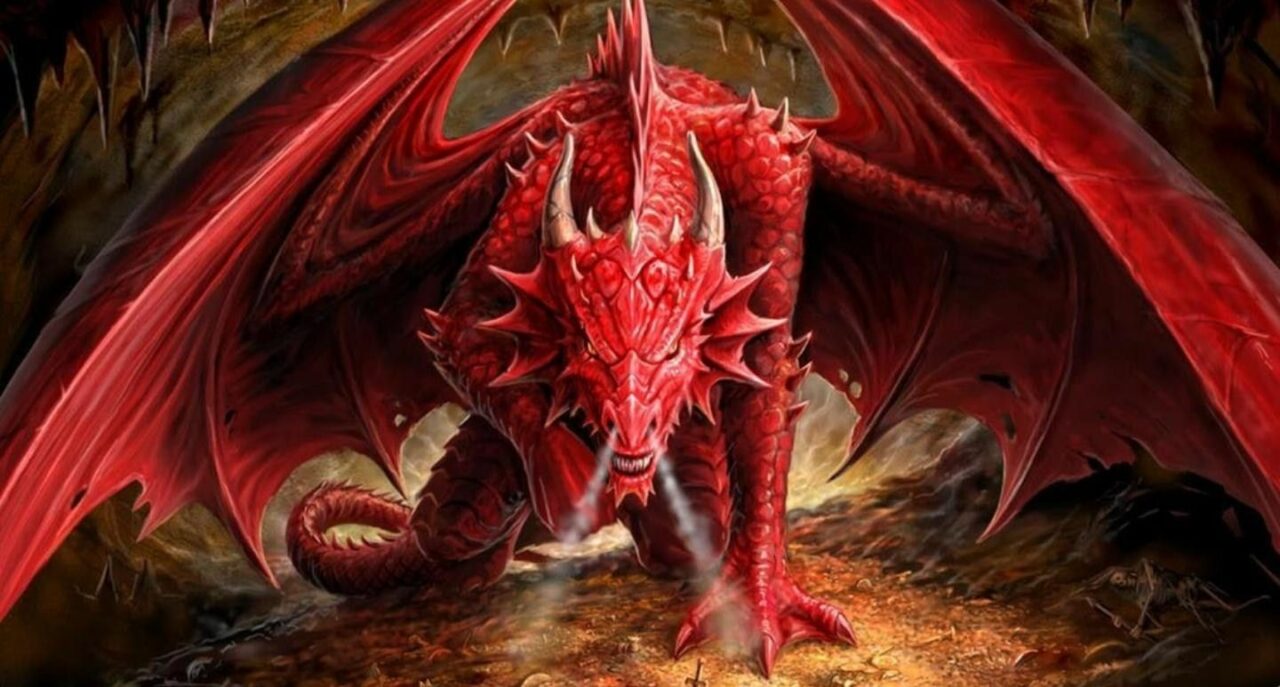
Friends we have an enemy. John calls him the “father of lies (John 8:44).” He wants to control us, conform us to his ways. We must say NO! We will meet him and his accomplices in Revelation 12-13. These chapters introduce us to “The Satanic Trinity.” They are a parody, a false trinity. They want us to buy the lies. John introduces us to a Red Dragon and his henchmen—two beasts.

This passage is about a war for our worship. Will you give your life to the lamb or the dragon?

The Source of Lies

The source of lies is personified as a great Red Dragon in Revelation 12. This chapter immediately follows the seventh trumpet of Revelation 11, but many scholars believe these events do not occur in chronological order. The beginning of chapter 12, at least, is a flashback to the first coming of Christ. In other words, Revelation gives us visions, but they are not neat and orderly. However, they are the basis for our ongoing Spiritual Warfare today. John writes,

And another sign appeared in heaven: behold, a great red dragon, with seven heads and ten horns, and on his heads seven diadems. His tail swept down a third of the stars of heaven and cast them to the earth. And the dragon stood before the woman who was about to give birth, so that when she bore her child he might devour it. (Revelation 12:3-4, ESV)

Pause. This is a traumatic image. We have a woman crying in v. 2, screaming in birth pains. And then, just imagine, standing before her waiting, anticipating the arrival of her baby is not a doctor, not a midwife, not even her husband … but a GREAT RED DRAGON. How horrifying! That will give you nightmares.

This is Revelation folks. Happy Halloween! Do NOT put a red dragon out on your lawn for Halloween my friends. My youngest daughter, Zoe, is the spiritually discerning one. Every Halloween since she has been able to talk, if we walk in a neighborhood, or go to Costco and find some outlandish Halloween decoration, she will rightly point at them and say, “CREEPY!”

This scene is creepy! And it should be. The dragon is up to no good. Halloween points to the reality of the Dragon! The reference 1/3 of the stars is debated, but it seems to symbolize the dragon striking “a great blow” against the people of God. It refers to persecution of the church. He is attempting to thwart the redemptive plan of God and persecute the people of God. Friends, write this down in your notes: There are CREEPY things in this world! That dragon is a CREEPER!

Who is the DRAGON? The OT, specifically Isaiah 27:1, speaks about a great serpent named, Leviathan, who had many heads. The seven heads symbolize his complete authority, the ten horns point to his power, and the diadems show his desire to usurp the authority of God. In the ancient world, many people believed dragons literally existed. And, in pagan religion, including some cults in the cities that Revelation was written to, Serpent or Dragon worship was a thing. Have you met someone who worships a dragon? John’s original audience would have been familiar with this practice. Dr. Thomas Schreiner offers helpful background:

The dragon truly is a monster. In the ancient Near East are primeval accounts of battles with monstrous serpents. In the Old Testament, those stories are taken over and demythologized as these monstrous dragons or serpents are defeated by Yahweh.[1]

This is battle between the gods. God is fighting for worship and dominion over the other gods of this world. So the pertinent question really is: will you worship the dragon or the lamb? Schreiner adds, “Stories of deliverance from the dragon or serpent were widespread in the ancient world, where the powers of light and goodness triumph over monsters.”[2]

This is what John is doing in Revelation 12.

The Power of Lies

We read this in Revelation 12:17-13:2,

And he stood on the sand of the sea. And I saw a beast rising out of the sea, with ten horns and seven heads, with ten diadems on its horns and blasphemous names on its heads. And the beast that I saw was like a leopard; its feet were like a bear’s, and its mouth was like a lion’s mouth. And to it the dragon gave his power and his throne and great authority. (Revelation 12:17b-13:2, ESV)

I picture the dragon on a beach, and he is roaring, as he calls up a monster from the ocean. This is  scene straight from a Godzilla movie!

There are a few things to observe here. First, that the beast rises from the sea is significant. In the ancient world, the sea was a place of evil and CHAOS. This beast is an “evil chaos inducing monster.” He is imbued with the power of the dragon in the real world. Notice he has the same number of horns, heads, and diadems as the dragon from 12:3. His mission is the dragon’s mission.

Second, Revelation 13:1-10 recalls the sea monsters found in Daniel 7:3-8. In that passage, four beasts rise from the sea. Those monsters mirror what we find in Revelation 13: a lion, a bear, and a leopard. Then, there is a final beast, fiercer than the others who mimics the Son of Man’s coming. However, this beast is a parody, a false, blasphemous parody. He is second member of the Satanic Trinity.

These images would have been especially relevant to John’s original readers. When Domitian was emperor, Roman coins announced him as the “Son of God.” Notice the dragon’s tactics. He gave this beast his power, his throne and his authority. Again, this is the visible outworking on the dragon here on earth. Most people think this refers to a political and military power … the spirit of the Anti-Christ.

So, the natural question is … who is the Anti-Christ? Who is this beast? A Preterist reading of Revelation usually connects this person with Rome and the Emperor Nero. A Futurist sees this government and rule as yet to be revealed. An Idealist sees this beginning with Rome but represents all evil governments and rulers through history.

Nero, however, was the first emperor to declare official state persecution against Christians. And he did truly horrific things. Be thankful you were not a Christian in the 60s A.D. He burned Christians alive to light his imperial gardens, fed them to the lions, and butchered them in grotesque ways. He burned down part of Rome for new building project, and then blamed the Christians so the citizens would kill them. Can you imagine? We have no idea. Nero would have been on the minds of John’s audience. Nero committed suicide in 68 A.D., and a legend arose that we would return to persecute again.

Here is my conviction: Nero was, at the least, the beginning of the dragon’s war against saints. Notice, throughout history, every time a totalitarian power rises, the Christians are attacked. Why? Because we worship the lamb and will not give allegiance to the emperor—to the beast! We resist—and they hate us.

What John is saying is this: if another anti-Christ is to come , he will be a “like” Nero. In many ways, this beast embodies all the wicked human rulers in history: Nero, Domitian, Hitler, Stalin, or Mao. There may be a greater Anti-Christ to come, but we have faced his spirit already.

The Consequence of Lies

What is the consequence of the lies? You may become a follower of the dragon’s beast—what Revelation calls, an “earth dweller.” The first beast came from the sea; the second comes from the land. Like the Holy Spirit, the third member of the true trinity, he magnifies the dragon and the first beast.

Then I saw another beast rising out of the earth. It had two horns like a lamb and it spoke like a dragon. It exercises all the authority of the first beast in its presence, and makes the earth and its inhabitants worship the first beast, whose mortal wound was healed. (Revelation 13:11-12, ESV)

This beast is sometimes called, the “false prophet” of the imperial priesthood. The dragon has raised his two beasts to make war on the people of God. Here he wants to go deeper. He wants to capture our hearts and make us fully devoted to the Satanic, false trinity. Moreover, this true even today. There have been assaults on the church throughout history. False teachers attempted to come in even during Biblical times. We must be on guard for false Christianity that comes from the second beast.

If we believe the lie of this beast, it will capture our worship. Let’s see how it plays out.

It performs great signs, even making fire come down from heaven to earth in front of people, and by the signs that it is allowed to work in the presence of the beast it deceives those who dwell on earth, telling them to make an image for the beast that was wounded by the sword and yet lived. (Revelation 13:13-14, ESV)

The beast may performs a great sign! Here we find the “earth dwellers,” which is code for those who follow the dragon’s beast. They are deceived. This beast knows how to woo the masses. But true believers, the people of God, must not be deceived! If you refuse to bow down to this beast he will use powerful coercion. If you do not worship this beast he will threaten your life. The beast wants to mark out its followers.

How To Fight A Dragon

What do we do with Revelation 12-13? What do we do when we face the Dragon and his Beasts in our time? Let me suggest three words of encouragement:

Develop Endurance. To be a Christian is to be hated by the world. Jesus himself tells us that in John 15. He told us they would hate us! Friends you must know we are in a cosmic battle. So when the arrows fly, when the losses come … endure! Be faithful. Be Faithful to the end.

Cultivate Wisdom. We live in a complex world where it is increasingly difficult to discern good and evil. Friends, you must know the Word of God. The Scriptures are a gift from God. You must know them deeply. And you must know how to apply them to difficult issues. Join a Bible study. Take a class. Get in a group of godly friends!

Embrace Boldness. We live in an age where we must not be afraid to speak and live the truth in love. And that requires boldness. Boldness is not about being mean—but it does mean speaking when you would rather not. Sharing the truth of God’s word. Stand firm on the truth when it is easier to give in.

Because sometimes … it is easier to embrace the lie. It is easier to go with the flow. It seems easier to bow to Caesar. I would encourage you today with the words of Alexander Solzhenitsyn: live not by lies! Remain faithful to the end. Stand firm on this truth: Jesus is King! Amen.

One day the Dragon Slayer will come and put an end to the reign of the Satanic Trinity once and for all! One day … the Dragon will be dead! And we will sing:

And they have conquered him by the blood of the Lamb and by the word of their testimony, for they loved not their lives even unto death. Therefore, rejoice, O heavens and you who dwell in them! (Revelation 12:11-12, ESV)

Church … REJOICE! We are the Dwellers of Heaven–REJOICE! We have and we will OVERCOME the dragon! By the blood of the lamb, and the word of our testimony.


[1] Schreiner, Thomas. Revelation (Baker). 430.
[2] Ibid, 430.

The Seven Trumpets of Judgment: Preterist vs. Futurist Interpretations (Revelation 8:6-11:19)

Sermon Summary

By Pastor David Hentschel

The Book of Revelation has fascinated and perplexed Christians for centuries. Among its many vivid and apocalyptic images are the trumpet judgments found in Revelation 8-11, a sequence of seven escalating disasters unleashed on the world. These judgments, signaled by the blasts of seven trumpets, range from natural calamities to demonic torment and, ultimately, the triumph of God’s kingdom. While scholars agree that these chapters are critical to understanding the message of Revelation, their interpretations differ widely depending on the theological lens used. Two dominant perspectives are the preterist and futurist views.

Gary DeMar (Preterist view):

“The events described in the Book of Revelation are a prophecy of events that were fulfilled in the first century, particularly the destruction of Jerusalem in A.D. 70. This is not some far-off event, but something that took place during the lifetime of the Apostles.”

Hal Lindsey (Futurist view / contrasting view):

“The judgments in Revelation are future events, not past. The idea that these woes have already occurred is a dangerous teaching that blinds people to the imminent return of Christ and the literal fulfillment of prophecy.”

This blog post will compare and contrast these two interpretations, examining how each understands the seven trumpets in the context of Revelation 8:6-11:19.

Overview of the Seven Trumpets (Revelation 8:6-11:19)

Before diving into the interpretive approaches, it’s essential to summarize the seven trumpet judgments themselves. These judgments, sounding after the opening of the seventh seal, are as follows:

  1. First Trumpet: Hail and fire mixed with blood fall to the earth, burning up a third of the earth, trees, and grass (Rev 8:7).
  2. Second Trumpet: A massive burning mountain is thrown into the sea, turning a third of the sea to blood, destroying ships, and killing sea creatures (Rev 8:8-9).
  3. Third Trumpet: A great star called Wormwood falls, poisoning a third of the rivers and springs, causing many to die from the bitter waters (Rev 8:10-11).
  4. Fourth Trumpet: A third of the sun, moon, and stars are struck, darkening a third of the day and night (Rev 8:12).
  5. Fifth Trumpet: A plague of demonic locusts torment humanity for five months, led by a king named Abaddon (Rev 9:1-12).
  6. Sixth Trumpet: Four angels are released, leading a massive army of horsemen to kill a third of humanity (Rev 9:13-21).
  7. Seventh Trumpet: The heavenly kingdom is proclaimed, signaling the final judgment and the reign of Christ (Rev 11:15-19).

These judgments, described in terrifying imagery, have fueled debate among scholars regarding their timing and significance. Let’s explore how preterists and futurists differ in their understanding of these events.

The Preterist Interpretation

Preterism holds that the events of Revelation were largely fulfilled in the past, specifically in the first century. According to preterists, Revelation was written to the early Christian church during a time of intense persecution, and its vivid descriptions of judgment are symbolic portrayals of God’s wrath upon Israel and the Roman Empire for their opposition to His people.

The Seven Trumpets in Preterism

In this framework, the seven trumpets represent a series of judgments that culminated in the destruction of Jerusalem in AD 70 by the Roman Empire. Each trumpet corresponds symbolically to real events in the first century.

  • First Trumpet: The destruction of vegetation could symbolize the ravages of warfare during the Jewish Revolt, and the destruction of trees for firewood for the Roman armies, which led to widespread devastation in the land of Israel.
  • Second Trumpet: The burning mountain might represent the upheaval of nations during this period, as “Jerusalem is cast into the sea,” (being turned over to Gentile rule), and the sea devastation refers particularly the Roman attacks that caused immense loss of life at sea during a battle on the sea of Galilee.
  • Third Trumpet (Wormwood): The bitter waters could be a metaphor for the spiritual corruption and apostasy of the Jewish leaders, leading to the suffering and eventual downfall of the Jewish nation. This is the opposite of the Exodus wilderness story, now God turns the fresh water bitter.
  • Fourth Trumpet: The darkening of celestial bodies are “Cosmic deconstruction language,” that refers to a nation coming under God’s judgment.

This chart outlines the Preterist interpretation of the three woes described in Revelation, specifically connecting the woes to historical events that culminated in the destruction of Jerusalem in A.D. 70.

  • Fifth Trumpet (Demonic Locusts): Preterists often interpret the demonic locusts as a depiction of the spiritual forces of evil at work in the city of Jerusalem, and described in detail by Josephus. bringing torment upon God’s people.
  • Sixth Trumpet: The great army released by the four angels is seen as a symbol of the Roman legions (at the Euphrates) that came and slaughtered a large portion of the Jewish population during the siege of Jerusalem.
  • Seventh Trumpet: The final trumpet, announcing the kingdom of God, is understood as the triumph of the early church following the judgment on Jerusalem, marking a new era of Christ’s spiritual reign over His new people.

The Futurist Interpretation

In contrast, futurism interprets the events of Revelation as prophecies that have yet to be fulfilled. Futurists argue that the seven trumpets refer to literal, future events that will occur during a period of great tribulation, culminating in Christ’s second coming. This perspective sees the judgments as part of a future apocalyptic scenario in which God pours out His wrath on an unbelieving world.

The Seven Trumpets in Futurism

Futurists typically interpret the seven trumpets as literal or near-literal global catastrophes that will take place during the Great Tribulation, which is a future period of judgment preceding the return of Christ.

  • First Trumpet: The hail, fire, and blood are understood as literal ecological disasters, possibly caused by volcanic eruptions or meteor strikes, resulting in the destruction of large portions of the earth’s vegetation.
  • Second Trumpet: The burning mountain thrown into the sea is often seen as a massive asteroid or comet impact, causing tsunamis and destruction of marine life and shipping.
  • Third Trumpet (Wormwood): Wormwood is interpreted as another celestial body, possibly a comet, that contaminates freshwater sources, poisoning much of the world’s drinking water supply.
  • Fourth Trumpet: The darkening of the sun, moon, and stars is often understood as atmospheric disturbances caused by the earlier disasters, such as smoke and ash from volcanic eruptions, nuclear warfare, or cosmic phenomena.
  • Fifth Trumpet (Demonic Locusts): In the futurist view, these locusts are seen as either demonic creatures unleashed from the abyss or a symbolic representation of advanced military technology that inflicts torment on humanity.
  • Sixth Trumpet: The massive army is typically seen as a literal, future conflict involving great nations, possibly a coalition of world powers, that will result in widespread death and destruction.
  • Seventh Trumpet: The final trumpet announces the imminent return of Christ, when He will establish His millennial kingdom and bring final judgment upon the wicked.

Comparing and Contrasting the Two Views

The preterist and futurist interpretations differ significantly in their timing and symbolism, yet they both view the seven trumpets as divine judgments. Preterists see the fulfillment in historical events of the first century, particularly the fall of Jerusalem and the defeat of Jewish and Roman powers. In this view, the trumpets are symbolic of God’s judgment on Israel for rejecting the Messiah and persecuting the early church.

Futurists, on the other hand, see the seven trumpets as literal future events that will occur during the Great Tribulation, with a strong emphasis on global, cosmic-scale disasters and a final confrontation between God’s forces and the rebellious world.

Whereas preterists focus on the symbolic meaning tied to first-century events, futurists anticipate a future outpouring of God’s wrath on an unrepentant world in preparation for Christ’s return. Both views acknowledge the sovereignty of God over history, but they apply that sovereignty to different time periods—past and future.

Conclusion

The seven trumpets of judgment are a dramatic and powerful part of the Book of Revelation, offering a sobering reminder of God’s ultimate justice. Whether viewed through a preterist or futurist lens, these chapters challenge us to consider our place in God’s unfolding plan. For preterists, the message of the trumpets is a fulfilled prophecy of God’s judgment on Israel and Rome, whereas futurists see it as a warning of the coming tribulation that will precede the return of Christ. Regardless of one’s interpretive approach, the seven trumpets underscore the seriousness of God’s judgments and the hope of His ultimate victory.

Recommended Resources for Further Study:

  • The Last Days According to Jesus by R.C. Sproul. Sproul defends a partial preterist view, offering thorough biblical support for the interpretation that many of the events prophesied in the New Testament were fulfilled in the destruction of Jerusalem in A.D. 70.
  • The Divorce of Israel by Kenneth Gentry. Gentry’s detailed analysis links the Book of Revelation with God’s judgment on Israel, showing the transition from the Old Covenant to the New Covenant through the historical lens of first-century events.

The Beginning of The End (Reflections on Revelation 6:1-8:5)

A Zombie Apocalypse

Many people avoid voting and politics because, at least in recent memory, every four years feels like the Zombie Apocalypse. “This is the last election of our lifetime.” “The world is going to end!” We chose to study Revelation this fall as reminder that, no matter what happens, Jesus is on his throne. No matter how bad things get, he is going to ride his horse back from heaven, conquering his enemies, bringing true justice to the world and ruling in righteous. One day … one day! His judgment will be just. This is the focus of Revelation 6:1-8:5 and that is where I invite you to join me today.

Speaking of the Zombie Apocalypse, I think people have a fascination with the end of the world. It’s the reason Revelation is a requested study. However, this is also prevalent in secular culture. Hollywood has made millions off “end of the world, dystopian movies.” When geo-politics gets chaotic, Hollywood studios cash in. Here are just a few examples: Terminator: Genisys, Mad Max: Fury Road, Deep Impact, Armageddon, The Hunger Games, and Divergent. Independence Day was a blockbuster in the 90’s … now Elon Musk says we are going to Mars, so it might be a reality! And Brad Pitt’s World War Z was the ultimate, recent zombie movie.

My point is that Christians and non-Christians alike want to know how the world ends. But here is the tension: we don’t know the day or the hour. We wish we did, but we do not. Therefore, we search for a map, a clue, a prophet. That is why, even non-Christians are intrigued by Revelation.

Revelation 1 set the stage, Revelation 2-3 spoke to the churches, Revelation 4-5 brought us into the presence of God for worship. Now, Revelation 6 begins the main event. The backbone of the book are these 21 judgments—the SEALS, the TRUMPETS, and the BOWLS.

The Stallions

Before we dive into the text, let me offer two principles to guide our discussion. First, an interpretative principal.  Since Revelation was a letter written to real churches in the first century, there must best application for them, even in the later chapters. Dr. Craig Blomberg describes it this way:

“The most fundamental hermeneutical principle to follow in interpreting Revelation is to look for meanings that could have been intelligible to first century Christians in Asia Minor, not hidden meanings decipherable only by people centuries later who think they might be living in the days immediately prior to Christ’s return.”[1]

In other words, Revelation cannot mean for us what it did not mean for them. As we walk through, I believe we’ll see how this is possible. Second, an applicational principle. No matter what position you take on these interpretative issues, the main point of the judgments in Revelation 6-16 is this: God has a plan to save and to judge. I believe everyone can agree with that. Dr. Jim Hamilton says it this way: “God has a plan to save and judge. He will judge justly. He will save those who trust in Jesus. The gospel will go to the ends of the earth, and then the end will come.”[2]

Revelation 6:1-8:5 is the beginning of the end. It tells us that God will judge the wicked, vindicate the righteous, and make all things new. It offers hope in the midst of suffering, glimpses of salvation, and the power of our great God.

For interpretative purposes, your personal views on the rapture and the tribulation will define how you read Revelation 6-16. Still, no matter your view, we can all benefit from the symbolic nature of the stallions.

Now I watched when the Lamb opened one of the seven seals, and I heard one of the four living creatures say with a voice like thunder, “Come!” And I looked, and behold, a white horse! And its rider had a bow, and a crown was given to him, and he came out conquering, and to conquer. (Revelation 6:1-2, ESV)

The thunderous word: COME! What is the first thing we see? A white horse! This is the first of what’s been called in popular culture, “The Four Horseman of the Apocalypse.” Futurists are often try to pinpoint who these horseman might be. Now again, if you take Revelation 6 as a future event for us, these four horseman haven’t appeared yet. If you take Rev. 6 as occurring throughout history, you see these as cyclical events repeatedly occurring. Let’s look at the symbolic nature of the horses.

First, the white horse is the most debated. You may remember that in Revelation 19:11, when Jesus returns he is riding a white horse. So, the question has been asked—is this Jesus in Revelation 6:2? Or … is this a false Jesus, a fake Jesus, a pretender … an anti-Christ? Some, such as Doug Wilson, argue that this horse is symbolic for Gospel proclamation going forward after Christ’s resurrection. The church is preaching the Gospel throughout the world empowered by their savior. However, I think, more likely is that this horse does represent the Spirit of anti-Christ culminating in a final, end times figure (as per 2 Thess. 2:1-10).

Three more horses appear and seem to mirror Jesus predictions in Matthew 24:4-9. The red horse comes to steal peace and make war on the earth. The black horse had scales in his hand where he weighed out the food to be distributed. This horse deals with famine. This was often a consequence of war in the ancient world. The final horse is pale, a greenish color which conveys ill-health—sickness, disease, infection. He has a rider—Death … and Hades followed him. You may remember that Jesus has the keys over these two and one day will throw them in the lake of fire.

A graphic scene of martyrs under and altar, apocalyptic warnings of the end, and one final question follows the horses: “For the great day of their wrath has come, and who can stand? (Rev. 6:17)”

This question sets up chapter 7.

 The Servants

Chapter seven opens with a majestic scene of four angels protecting God’s people. We read this:

After this I saw four angels standing at the four corners of the earth, holding back the four winds of the earth, that no wind might blow on earth or sea or against any tree. Then I saw another angel ascending from the rising of the sun, with the seal of the living God, and he called with a loud voice to the four angels who had been given power to harm earth and sea, saying, “Do not harm the earth or the sea or the trees, until we have sealed the servants of our God on their foreheads.” (Revelation 7:1-3, ESV)

This scene is a major shift. It moves from God’s judgment on the wicked at the end of chapter 6, to this protection of his people in chapter 7. The phrase, “after this,” seems to focus on what John saw next; it does not necessarily follow chronologically after those events. This chapter shows how God’s people are protected in the midst of these events. What do we see? Angels holding back the judgment. Why? Because the SERVANTS of God are SEALED, they are MARKED OUT as his own people. This is similar to Ephesians—the Holy Spirit seals us. It also a contrasts the Mark of the Beast later in Revelation.

After all the horror of Chapter 6, this chapter brings great comfort. God will protect his people. It does not mean we will not suffer but the suffering will not be beyond what we can bear. And if you know Jesus, if you are covered by the blood of the lamb … judgment and wrath will pass over you, like it did the Hebrew people at the Passover.

This is follow by the famous images of the 144,000 and the Great Multitude. People debate whether this is one group—representing the whole church—or two groups, the first being a regathered Israel. In either case, the end of chapter 7 outlines the glorious hope of the New Creation:

“Therefore they are before the throne of God, and serve him day and night in his temple; and he who sits on the throne will shelter them with his presence. They shall hunger no more, neither thirst anymore; the sun shall not strike them, nor any scorching heat. For the Lamb in the midst of the throne will be their shepherd, and he will guide them to springs of living water, and God will wipe away every tear from their eyes.” (Revelation 7:15-17, ESV)

No matter your view on the rest of the book, we all agree about the ending. And that should be out position toward others with different views of eschatology. We all agree on how it will end. God’s people will stand before his throne, with resurrected bodies, because of the blood of the lamb. He is our shelter. We will never be hungry or thirsty again. Jesus is our shepherd offering living water.

It will be so glorious … we will shed tears of joy and relief. Don’t miss that last verse. He will wipe way every tear from our eyes. Think for a moment about every tear you’ve shed in this life. Have you wept over your trials in your family? Have you wept over disappointment? Have you wept over losses? A health diagnosis? Chronic pain? Have you wept because a loved one rejected Jesus? Imagine our brothers and sisters around the world, like the story I shared earlier, who have suffered immense loss for their faith and flooded their beds with tears.

What does John tell us? No more tears. No more tears. What tears do you need wiped away?

The Silence Before The Storm

Revelation 6 is the birth pains leading to the end. There is one more seal. Finally, Jesus opens the seventh seal and we read this …

When the Lamb opened the seventh seal, there was silence in heaven for about half an hour. (Revelation 8:1, ESV)

There was silence. Silence. Eerie silence. So silent you know something bad is about to happen. Have you ever had that experience? The prayers of the saints and one final, cataclysmic image follow this.

Then the angel took the censer and filled it with fire from the altar and threw it on the earth, and there were peals of thunder, rumblings, flashes of lightning, and an earthquake. (Revelation 8:5, ESV)

The trumpets are about to blast. The storm is coming. The silence is over. God will save … and God will judge.

Throughout church history, many pastors and scholars have shied away from this book. Many have an issue with this middle section of judgments. Those are fair points. However, I would say that God must be just in punishing sin. He poured out his judgment and wrath on himself when he went to the cross—the cross which protects us to this day. This judgment will make all things right and lead us to the perfection of the new heavens and new earth at the end. What does Revelation 6:1-8:5 teach us? I’ll offer three brief application points:

First, pray for justice. The prayers of the saints offered in Revelation 6 are heard. You may feel like your prayers for justice have not been heard, that’s not true. They are heard and one day God will answer. In Revelation 8, God will answer. Paul tells us in Romans 12:19, “Beloved, never avenge yourselves, but leave it to the wrath of God, for it is written, “Vengeance is mine, I will repay, says the Lord.”’ God will make all things right. If you’ve been wronged, pray for God to end your suffering and trust he will.

Second, trust God in your suffering. We may hold different views about the final tribulation period, but all Christians will experience trials at some point. We all suffer as part of this creation groaning. What Revelation teaches us is that God sees our suffering, he is with us, and in the end he will do something about it.

Finally, always remain faithful. It may feel, right now, like you are surrounded by enemies on all sides. It may seem that your trials will never end. In those moments, look forward and be faithful. Don’t fall for the false promises of the antichrist, the fake rider, the pretender. He will seek to deceive you and lead you astray. In your moment of despair, lift your eyes, lift your heart and remember …

One day the REAL RIDER will appear. He will return with the armies of heaven and the resurrected saints from the ages. He will put an end to evil and throw the great beast into the abyss.

[1] Blomberg, Craig. From Pentecost to Patmos. (B & H Publishers: Nashville, 2006). 513-14.

[2] Hamilton, Jim. Revelation. (Crossway: Wheaton, IL, 2012). 174.

“A Vision of Heavenly Worship.”

Sermon Summary: Revelation 4-5

10/6/24

Pastor Dave Hentschel

In Revelation 4-5, we are given a glorious vision of the heavenly throne room that reveals the central figure of the universe, the one who reigns, and the one who redeems. This passage transports us from the earthly struggles into the presence of God, where worship and sovereignty are vividly displayed. “Chapters 4–5 are the pivotal chapters of the entire book of Revelation. The primary purpose of these chapters is to underscore God’s sovereignty over history and to show that the Lamb, Jesus Christ, is the one who will carry out God’s purposes in the world. The worship of the Lamb and the One on the throne sets the stage for the rest of the book’s judgment and salvation themes.” — G.K. Beale, The Book of Revelation: A Commentary on the Greek Text

Let’s consider three key aspects of this vision.

  1. Who Is the One on the Throne? (Revelation 4:1-11)

The scene opens with a description of God seated on His throne. The throne is the central symbol of divine authority, power, and sovereignty. Around the throne, we see awe-inspiring imagery—a rainbow that encircles it, flashing lightning, rumbling thunder, and the seven spirits of God. All creation bows before Him. This picture reminds us that despite earthly chaos, God remains in control, unshaken in His rule. He is holy, transcendent, and worthy of all honor and glory. His majesty is proclaimed by the four living creatures, who declare day and night:
“Holy, holy, holy, is the Lord God Almighty, who was and is and is to come!” (Revelation 4:8, ESV).

There are five songs or chants in Revelation 4-5, here they are laid out in this chart:

1 – The song of the 4 living creatures:


“Holy, holy, holy, is the Lord God Almighty, who was and is and is to come!””

Revelation 4:8 ESV

2 – The song of the Elders: “Worthy are you, our Lord and God, to receive glory and honor and power, for you created all things, and by your will they existed and were created.””

Revelation 4:11 ESV


3- The new song of the creatures and elders: ““Worthy are you to take the scroll and to open its seals, for you were slain, and by your blood you ransomed people for God from every tribe and language and people and nation, and you have made them a kingdom and priests to our God, and they shall reign on the earth.””

Revelation 5:9-10 ESV


4 – The song of myriads of angels and elders “Worthy is the Lamb who was slain, to receive power and wealth and wisdom and might and honor and glory and blessing!””

Revelation 5:12 ESV


5- The song of all creation: “To him who sits on the throne and to the Lamb be blessing and honor and glory and might forever and ever!””

Revelation 5:13 ESV


  1. Who Is the One Who Is Worthy? (Revelation 5:1-9)

In chapter 5, John sees a scroll in the right hand of the one on the throne. This scroll represents God’s plan for the world, involving both judgment and redemption, but no one is found worthy to open it. John weeps until he is comforted with the announcement that the Lion of Judah, the Root of David, has conquered and is worthy to open the scroll. But instead of seeing a lion, John sees a Lamb, “standing, as though it had been slain” (Revelation 5:6, ESV). This paradox reveals Christ—the conquering Lion is also the sacrificial Lamb. Jesus is worthy because of His death and resurrection, by which He ransomed people for God from every tribe and nation. His worthiness to enact God’s redemptive plan is based on His finished work on the cross.

  1. Who Are the Ones Who Will Sing? (Revelation 5:10-14)

Finally, the scene crescendos in worship as all of heaven erupts in a new song. The twenty-four elders, representing the redeemed people of God, fall down before the Lamb and sing:
“Worthy are you to take the scroll and to open its seals, for you were slain, and by your blood you ransomed people for God” (Revelation 5:9, ESV).
They are joined by countless angels and all creatures in heaven and on earth in a chorus of praise. The redeemed—those who have been purchased by the blood of the Lamb—are the ones who will sing. This picture of worship reminds us that God’s plan culminates in global worship, with believers from every nation giving glory to Christ forever.

In this heavenly vision, we are reminded of the majesty of God’s throne, the worthiness of the Lamb, and the joyful future of those redeemed by His blood. Revelation 4-5 lifts our gaze from our present struggles to the eternal reign of God and the ultimate victory of Christ. Let this vision fuel our worship today as we join the chorus of heaven, declaring the worthiness of the One who reigns and redeems.

Grant Osborne says it this way, “The vision of chapters 4 and 5 reveals a majestic picture of heavenly worship where the focus is on the sovereignty of God and the worthiness of the Lamb. The worship of both the Creator and the Redeemer unites all of heaven’s beings, underscoring that salvation and judgment are inseparable aspects of God’s reign.”
— Grant R. Osborne, Revelation

“An Open Letter to the Church of Jesus Christ.” (Rev 2-3)

Sermon Summary: Pastor David Hentschel

How good of a listener are you? In life, the voices we choose to listen to shape who we become and what we prioritize. But as Christians, the most important voice is that of Jesus Christ, who speaks to us not only through the Word but also through the Spirit in our daily walk. In Revelation 2-3, Jesus addresses seven churches, each with a unique situation, but His call is consistent: “Listen!”  The challenge for us today is: are we listening to His voice in our own lives?

The Seven Churches: Lessons for Today

  1. Ephesus: The Forgetful Church (Revelation 2:1-7)
    The church in Ephesus had many admirable qualities, including their hard work and perseverance. However, they had forgotten their first love—Jesus. Christ calls them to remember where they had fallen and return to their passion for Him, reminding us that no amount of religious activity can replace genuine love for God.
  2. Smyrna: The Suffering Church (Revelation 2:8-11)
    Smyrna was a church facing intense persecution. Jesus commends them for their faithfulness despite suffering and encourages them to be faithful even unto death. In times of hardship, we too are called to endure, knowing that our ultimate victory is secured in Christ.
  3. Pergamum: The Compromising Church (Revelation 2:12-17)
    Pergamum had compromised their faith by allowing false teaching and immoral practices into the church. Jesus warns them of the dangers of blending worldly values with Christian belief, calling them to repentance. This message challenges us to remain faithful to biblical truth in a culture that often pressures us to conform.
  4. Thyatira: The Wayward Church (Revelation 2:18-29)
    While Thyatira was known for its good works, they tolerated sin, particularly the teachings of Jezebel, who led people into idolatry and immorality. Jesus calls the church to address the sin in their midst and to remain faithful to Him alone. His message reminds us to avoid drifting away by allowing sin to take root in our hearts.
  5. Sardis: The Slumbering Church (Revelation 3:1-6)
    Sardis had a reputation for being alive, but Jesus reveals that they were spiritually dead. His message is a wake-up call to those who are complacent in their faith. For us, it’s a reminder that outward appearances can be deceiving, and we must continually examine our hearts to ensure our faith is vibrant and real.
  6. Philadelphia: The Enduring Church (Revelation 3:7-13)
    Philadelphia is commended for their steadfast endurance in the face of opposition. Though they had little strength, they kept Christ’s word and did not deny His name. Jesus promises them an open door that no one can shut. This church teaches us the value of faithfulness, especially when we feel weak and powerless, trusting in God’s strength to sustain us.
  7. Laodicea: The Lukewarm Church (Revelation 3:14-22)
    Laodicea is described as lukewarm—neither hot nor cold. They had grown spiritually indifferent and self-sufficient, unaware of their need for Christ. Jesus urges them to repent and return to a passionate, dependent relationship with Him. This sobering message challenges us to resist spiritual apathy and continually cultivate a fiery devotion to Christ.

Conclusion: Jesus Is Knocking

As we reflect on these seven churches, the question remains: are we listening to Jesus? Revelation 3:20 presents an image of Christ standing at the door and knocking. He is eager to enter, to commune with us, and to restore our hearts. The key is whether we will hear His voice and open the door.

Jesus’ message to the churches is just as relevant today. Whether we are forgetful, suffering, compromising, wayward, slumbering, enduring, or lukewarm, the invitation is clear: repent, return to Him, and rekindle our love for the One who stands at the door, ready to enter our hearts. Will you listen? Will you open the door? For more from our series on the Seven Churches of Revelation, go here.

Who Has The Keys? (Reflections on Revelation 1:9-20)


Locked Out!
Have you ever been locked out of somewhere? You need to get into your house but you forgot your keys. You need to start your car but you dropped your keys in the store. You need to get into the lockbox for an important documents but the keys are lost. Being locked out is frustrating!

How do you get in if you’ve been locked out? You needs the keys. That is what John offers in Revelation 1:9-20. John offers, what I will call, the “keys of courage.” In this book, the Apostle John “unlocks” the mysteries of the future—he offers us the key to hope. Revelation, as a book, offers hope precisely because we are told how history will end! Revelation fills our heart with courage as we contend for the faith here and now. Revelation challenges us to place our faith in the Sovereign Lamb of God, the Rider on the White Horse, the King of Kings and Lord of Lords!

Recognize The Darkness
First, recognize the darkness. After his epistolary opening, John continues the unveiling:

I, John, your brother and partner in the tribulation and the kingdom and the patient endurance that are in Jesus, was on the island called Patmos on account of the word of God and the testimony of Jesus. (Revelation 1:9-10, ESV)

9-11 of chapter one serve as John’s commission to write the whole book. However, before looking forward, he reminds his readers of their present reality and his partnership in it. In short, he recognizes the darkness. He begins, pastorally, by reminding his readers that they are in this together. I am your “brother and partner.” What does this partnership entail? Notice three application points in the darkness: (1) The Tribulation (2) The Kingdom (3) The Endurance. All three are found in their union with Christ.

First, the Tribulation. This, of course, is an important and debated term in Revelation. What is it? How long is it? Who experiences it? When will it happen? The Greek word is Thlipsis. This is a common New Testament (NT) word for suffering, but it is often translated “tribulation.” In Revelation, this word often describes the “suffering and pressures experienced by believers.”[1]

Second, the Kingdom. What Kingdom is he referring to? This concept is interesting because we don’t expect to find tribulation and kingdom together. It’s possible this refers to the future end times kingdom, but I think it more likely is picking up the “already/not yet” aspects of the kingdom common in the NT. In other words, as you experience tribulations, remember the Kingdom of God is HERE … in power! But it is not yet fully here. The way we push back the darkness is our world is by exposing it to the Kingdom of LIGHT!

Finally, the Endurance. In the NT, this word regularly calls believers to perseverance in difficult times. If I could sum up John’s exhortation, “in this life, there will be trials, so patiently endure and never stop building the kingdom.” You may be begging Jesus to return. Recognize the darkness and push it back. Even to the point of exile. Even to the point of consequence.
Notice: “in Jesus” modifies all three words. Dr. Jim Hamilton captures it this way:

“Unlike the Roman Empire, which promised peace but delivered brutality and fear, the kingdom of God promises tribulation and delivers peace and confidence and eternal salvation to those who patiently endure. Jesus will bring hope and change.”[2]

For John, Patmos is the cost of telling the story. What does it say? He was on Patmos “on account of the word of God and the testimony of Jesus.” John had COURAGE.

Radiate The Light
Now we get into the vision:

Then I turned to see the voice that was speaking to me, and on turning I saw seven golden lampstands, (Revelation 1:12, ESV)

The trumpet has sounded; John regains his hearing, only to see GOLD LAMPSTANDS. What is this? This second section is full of Old Testament imagery. In Exodus, the lampstand in the tabernacle had seven lamps to shed light on the Holy Place. Zechariah the prophet had a lampstand in chapter 4 of his book. The Revelation lampstands, as we will see, are connected to the seven churches. It connects them to the Spirits power; if they go out it can indicate the church is not accomplishing God’s purposes in the world.

Jesus himself calls us to be SALT and LIGHT in the world (Matthew 5:16). Are we? How bright is your lampstand? If you light is diminished, it is possible you are missing the power and radiance of the one who walks among his lampstands.

Think about your current situations. When challenges come your way, do you only complain about the darkness … or do you see the radiate the light of Christ? Look past the tribulation to the triumph of our king. That is what Revelation will show us. But to radiate the light of Christ requires courage.

Rest In The Victory
Vv. 12-16 is a magnificent vision of Christ! Let me ask, if you met the Jesus in the vision, if you were John, how would you response? Let us look at v. 17:

When I saw him, I fell at his feet as though dead. (Revelation 1:17, ESV)

John is awestruck by what he has seen and so would we. This reaction, this vision, is why many people have a hard time with Revelation. The images are scary. You might be saying, “This dark world is terrifying. Pastor Bob, I am walking through some uncharted waters am I don’t know if I’ll make it. A terminal health diagnosis. The loss of a loved one. A child has wandered from the faith. I can’t afford to feed my family! You keep telling me that Courage … costs. I don’t have any courage! What I need … it’s a Jesus will sword in his mouth, I need a comforter!”

John falls at his feet in fear.  How does Jesus respond?

But he laid his right hand on me, saying, “Fear not […] (Revelation 1:17b, ESV)

Fear … NOT! The fiery gaze of the Savior looks right through your soul and he says, “I see your fear … don’t fear! Trust me! The reason for this vision is to show you my power!” Do … Not … Be … Afraid! Courage! Notice, he extends his right hand to John. That is the hand of strength, which signals power and authority. Literally, Jesus gives his strength to John in difficult times.

Now … why should we not fear?

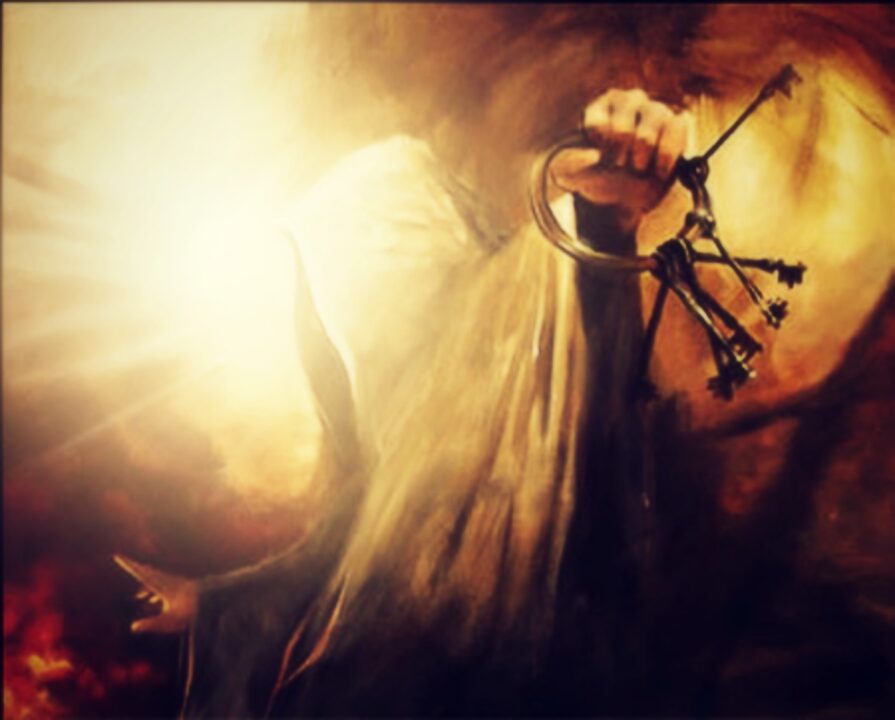
But he laid his right hand on me, saying, “Fear not, I am the first and the last, and the living one. I died, and behold I am alive forevermore, and I have the keys of Death and Hades. (Revelation 1:17-18, ESV)

Friends, did you just hear that? “Don’t fear. I … have … the … KEYS!!!!” Of death. Of hades. I died and I rose again. Does Satan have the keys? No. JESUS HAS THE KEYS! That is powerful. The book of Revelation fascinates people precisely because of these terrifying images. But it also captures people because we want to know, “it’s going to be alright!” Right here, Jesus is letting us know that in the end it’s going to be okay.

Why does Jesus tell us not to fear?

He is FIRST and LAST. The phrase is repeatedly found in Scripture and it often conveys the power and uniqueness of God (Is. 44:6). Commentator Greg Beale says, “This phrase refers to the complete sovereignty of God over human history from beginning to end.”[3]  He is on our side if we know him. We do not need to fear.

Additionally, He is ALIVE. He is not dead! After Jesus died and the disciples were overwhelmed with fear. The doors of their home was locked for fear the Jews would kills them. John records in his Gospel that Jesus appears to them. What was the first thing he said to them?  “Peace be with you.” Don’t fear. It’s okay. Jesus goes one step further in v. 18.

He has the KEYS! He has the keys of Death and Hades. This is a significant image. It shows that he rules over death. I guarantee there is at least a few people in here who fear death today! You need to hear this: Jesus has faced death so you don’t have to! Rest in the Victory!

Three Questions
No matter you view, the point is this: in the end, Jesus wins! He holds the keys to the Kingdom (shake). We can have hope! His radiance should ignite our lampstand. Not matter your view, all roads lead to the New Heavens and New Earth with Jesus on his throne. So, as we close, I’m going to ask you to consider three questions during your time with the Lord. Use them to guide your prayers.

First, What’s My Darkness? Friends, we have to recognize the darkness, but our tribulations are not all the same. Take some time this week to actively bring your dark circumstances before the Lord as you plead for mercy.

Second, Where’s My Light? This question is meant to point us back to John’s vision of our great Prophet, Priest and King. Jesus, the Son of Man who will one day come on the clouds and make all things right. Until that time, he walks among the lampstands of the church to light the flame in our hearts.

Finally, Who’s Got The Keys? Church, never forget who has the keys! You know, sometimes we walk through life like Jesus doesn’t hold the keys to Death and Hades. Seriously. We walk around complaining of our circumstances. We walk around in fear like the sky is failing. Church, the sky only falls if Jesus commands it too. He is sovereign over all! And, as Revelation will show, he will come back to make it right.
_____________________________________________________
[1] Shreiner, Thomas. Revelation. (Baker Books: Grand Rapids) 2023. 95.
[2] Hamilton, Jim. Preaching the Word: Revelation. 43-44.
[3] Beale, G.K. A Shorter Commentary on Revelation (1:17).

Introduction to the Revelation of Jesus Christ.

Revelation 1:1-8

Sermon Summary:

Pastor David Hentschel

This Sunday, we began our new sermon series on the book of Revelation, diving into the rich and powerful opening verses of Revelation 1:1-8. This passage introduces the great unveiling of Jesus Christ, His plan for the world, and His ultimate victory over evil. In today’s sermon, we explored three major questions: What is the book of Revelation? What are the four views of Revelation? And what are the key themes we find throughout this book?

  1. What is the Book of Revelation?

The book of Revelation, often misunderstood, is not a riddle or a mysterious code to be cracked. Rather, it is an “apocalypse,” meaning an unveiling or a revealing of God’s ultimate plan for history. Written by the Apostle John while in exile on the island of Patmos, this book was given to the church to provide hope, encouragement, and a vivid reminder of Christ’s triumph.

The book is filled with visions, symbols, and prophetic imagery that point to the unfolding of God’s sovereign purposes. It is meant to encourage Christians to remain faithful despite suffering and trials, reminding us that in the end, Jesus Christ reigns supreme and will come again to restore all things. The book wears three hats in terms of its genre: It is a Letter, a Prophecy and an Apocalypse.

  1. What Are the Four Views of Revelation?

Over the centuries, Christians have interpreted the book of Revelation in different ways. Understanding these four main approaches can help us appreciate the diversity of thought and keep us humble as we explore its message.

  • Preterist: The preterist view sees Revelation as primarily fulfilled in the past, particularly during the Roman Empire. In this view, the prophecies of Revelation were meant to encourage first-century Christians in their persecution and struggles.
  • Futurist: The futurist view interprets most of the book as a prophecy of future events yet to happen, including the return of Christ, the final judgment, and the establishment of the new heaven and new earth.
  • Historicist: The historicist approach sees Revelation as a symbolic account of the entire history of the church, from the first century until the return of Christ. It views the visions as corresponding to various events and periods in church history.
  • Idealist: The idealist view sees Revelation as a timeless allegory of the struggle between good and evil. In this interpretation, the book teaches spiritual lessons and encourages perseverance, but is not tied to specific historical events.
  1. What Are the Key Themes of Revelation?

Four major themes rise to the surface as we journey through Revelation. These themes are meant to shape our hearts, strengthen our faith, and give us hope in the midst of our trials.

  • The Sovereignty of God: From the beginning to the end of Revelation, God’s absolute rule is on display. He is in control of all things, even when the world seems chaotic. This book reminds us that God’s plans cannot be thwarted, and He will bring about His purposes in His time.
  • The Judgment of God: A sobering theme throughout Revelation is God’s judgment on evil. The book portrays the coming day when Christ will return to judge the living and the dead. It reminds us that sin will not go unpunished, but that God’s justice will prevail.
  • The Suffering and Endurance of the Saints: Revelation was written to encourage believers facing persecution, calling them to endure suffering with faith and hope. The saints are depicted as those who overcome by the blood of the Lamb and the word of their testimony (Revelation 12:11). The church is called to stand firm in the face of trials, knowing that our suffering is not in vain.
  • The Certainty of Christ’s Coming: The book ends with a powerful promise—Christ is coming again! This is the blessed hope of every believer. No matter how dark the world may seem, we can be certain that Jesus will return to make all things new. His coming will bring about the final victory over sin, death, and Satan. In the end, we “will see His face.” (Rev 22:4). This is our great hope!

Revelation is not just a book for the curious or the speculative—it is a book for the suffering, for those longing for hope, for those needing a reminder of Christ’s sovereignty and coming victory. As we continue in this series, may we be encouraged to keep our eyes on Jesus, the Alpha and the Omega, who was and is and is to come, the Almighty (Revelation 1:8). Let us live in the light of His glorious return, knowing that the end of the story is already written: Christ reigns, and He is coming soon!

An Exhortation For Election Season (Fall 2024 Underground Quarterly)

What Has Captured Your Attention?

Election season is looming. As we enter fall of 2024, the social media apps on our phones, computers and televisions capture our attention with the latest news. “This is the most important election ever!” Screams a shrill voice on every podcast! “We may not have a country left in November!”

Let’s admit the unprecedented nature of this election cycle. A former president and current nominee nearly dies from a rifle shot to the head. Save for a last second move, Donald Trump’s end could have been gory, graphic and captured in high definition. Additionally, the sitting president drops out months before the election. This has never happened before. In our 24-hour news cycle, we are waiting for the next bombshell to drop.

This election season is, simultaneously, exciting and frightening. Like the pull of a magnet, every four years it captures our attention.

The Ease of Drifting

Then, there are the political issues themselves. It is true that elections have consequences. Christian Ethicist Andrew Walker defines politics this way:

“Politics is the practice of organizing and regulating our lives in society under God-ordained legal authority for the sake of justice.”[1]

In other words, politics is divisive because other people can now regulate my life based on a certain set of principles. Depending on the election results, we may or may not agree with those governing principles.

Consider the issues in this election cycle. Human dignity, including abortion, is on the ballot in several states. The consequences of those votes could set back the pro-life cause. Crisis pregnancy centers sit in the crosshairs of state attorney generals. Additionally, issues of gender and sexuality, which have influenced the adjacent topics of education and parental rights, are constant fodder for debate. Free speech is under fire globally, raising concerns of those limits appearing in the United States.

These are significant, moral issues. The moral drift in society and the church at large disturbs many Christians. It is worth asking, why do we drift? For one thing, there is an ease of “going with the cultural flow.” There is a cost for standing on the “wrong side of history.” Yet, this may be required of us in the future. Persecution could be on our doorstep as we hold the line on core, biblical issues.

The writer of Hebrews knew this reality well. Living during a season of social ostracism for Christians, the writer exhorted believers with these words:

Therefore we must pay much closer attention to what we have heard, lest we drift away from it (Hebrews 2:1, ESV)

This is a first step for Christians during election season. “Pay attention!” To what? “What you have heard.” What have we heard? The entirety of the Biblical message. Here we find an argument for a holistic Biblical worldview in all of life. What are the consequences of not paying attention—of not knowing our Bible? We will “drift away.” The currents will move us. Our whole mindset is vulnerable to co-opting by the message of the day.

Put another way: What captures our attention determines our direction.

This election season, there are important issues to debate. The outcome will be consequential. Nevertheless, Jesus will still be on his throne. With that in mind, the writer of Hebrews offers three more truths to aide us during these turbulent times.

A Reliable Message

A robust biblical worldview should inform how we engage the world. We read this:

For since the message declared by angels proved to be reliable, and every transgression or disobedience received a just retribution, (Hebrews 2:2, ESV)

We have a reliable message. Within the Scriptures, we find a message that is trustworthy, comprehensive and practical. The application requires us to study the Bible, illuminated by the Holy Spirit and apply it to our lives. All theology is practical theology. Our view of God will determine how we live our life. Our understanding of the Scriptures impacts our moral positions; our views of right and wrong. If we oppose God—judgment will come. That is a hard message for modern ears.

While the Bible’s teachings will not always be popular, they are reliable and true.

A Great Salvation

The teachings in Scripture are crucial because they reveal God’s plan of salvation. The writer asks,

How shall we escape if we neglect such a great salvation? (Hebrews 2:3a, ESV)

If we have searched the Scriptures and declared Jesus to be Lord, we are part of God’s family. Salvation is a gift demanding attention. God did not save us just to save us; he saved us to make a difference in this world by furthering his kingdom. It is worth asking this election season, how am I furthering God’s kingdom? Ask it before your post. Ask it before you enter a debate. Ask it when a challenge arises and you must take a stand.

Do not neglect your salvation because silence seems easier. Why?

A Call to Attest

We are called to “attest” to what God has and will do. The writer finishes,

And it was attested to us by those who heard, while God also bore witness by signs and wonders and various miracles and by gifts of the Holy Spirit distributed according to his will. (Hebrews 2:3-4, ESV)

To attest means to affirm something as correct and true. This applies to salvation, but also to all Biblical truth. Where that applies to matters of morality and public theology, we are called to attest to what God says is true. That will not be without consequence at times. It may place us opposite the majority opinion, or even bring persecution. It may not feel good.

However, we must do the right thing … and trust God to bear witness.

Friends, we live in a peculiar moment in American life. As our world moves in a Post Christian direction, we will find ourselves in a Hebrews 2 scenario. My exhortation today is this: do not flinch. The message is true, our salvation is great, and because of that, we must speak a word of attestation.

This is God’s world. In the end, he will make all things new. Let him capture your attention, lest you drift away.


_______________________________________________________________________

[1] Walker, Andrew. The Nations Belong to God. Pg. 14.


Sermon Summary: Luke 24:1-53

Pastor David Hentschel

9/1/24

“The Resurrection of the Son of God.”

After 9 months and 40 sermons, covering 24 chapters and 1,151 verses, we have completed our study of the Gospel of Luke. The story of Jesus ends with a climactic ending: The Resurrection of the Son of God!

The resurrection of Jesus is the cornerstone of the Christian faith, yet it’s often misunderstood or overlooked. Even popular portrayals, like Mel Gibson’s The Passion of the Christ, focus heavily on the suffering and death of Jesus but leave the resurrection almost as an afterthought. Similarly, The Jefferson Bible, a controversial work by Thomas Jefferson, completely excludes the resurrection, ending with Jesus’ death and burial. But without the resurrection, our faith is incomplete. Paul says in 1 Corinthians 15, that if we erase this central doctrine, our preaching is useless, and our faith is in vain. The resurrection is the cornerstone of the Christian faith. Gary Habermas says, “As long as we’re sure that Jesus is the Son of God, who died on the cross for our sins and was raised from the dead, Christianity follows…” Are these things true?

Luke 24 brings us to the glorious culmination of Jesus’ earthly ministry, highlighting four significant events: The Empty Tomb, The Emmaus Road, The Upper Room, and The Great Commission.

1) The Empty Tomb (Luke 24:1-12)

Early on the first day of the week, a group of women went to Jesus’ tomb to anoint His body, only to find the stone rolled away and the tomb empty. They were perplexed and terrified, but two men in dazzling apparel appeared and reminded them of Jesus’ words, that He must be crucified and on the third day rise again. The empty tomb is not just an empty promise; it is the evidence that Jesus has conquered death. The women were the first witnesses to this miraculous event, and their initial reaction of confusion turned to joy as they realized the marvelous truth: Jesus is alive!

Debunking the Swoon Theory

The swoon theory suggests that Jesus didn’t actually die on the cross but merely fell unconscious (“swooned”) and later revived in the tomb. However, this theory fails to account for the brutal nature of Roman crucifixion. Roman soldiers were experts in execution, and they verified Jesus’ death by piercing His side with a spear, causing blood and water to flow out, indicating a separation of bodily fluids consistent with death. Furthermore, the idea that a severely beaten and crucified man could somehow unwrap Himself from burial linens, roll away a massive stone, overcome Roman guards, and appear to His followers as a triumphant, resurrected Savior defies logic and contradicts historical and medical understanding.

Debunking the Stolen Body Theory

The stolen body theory claims that Jesus’ disciples stole His body to fabricate the resurrection story. However, this theory is highly implausible for several reasons. First, the tomb was secured by a large stone and guarded by Roman soldiers, making it nearly impossible for anyone to steal the body without detection. Second, the disciples were initially scared and in hiding after Jesus’ crucifixion, not in a state of mind or spirit to plan such a heist. Finally, all but one of the disciples were eventually martyred for their unwavering belief in the resurrection. It is inconceivable that they would willingly suffer and die for something they knew was a lie.


2) The Emmaus Road (Luke 24:13-35)

Later that same day, two of Jesus’ followers were walking to Emmaus, discussing everything that had happened. Jesus Himself drew near and began to walk with them, though they were kept from recognizing Him. As they talked, Jesus opened the Scriptures to them, explaining how all the prophecies pointed to His suffering and resurrection. When He broke bread with them, their eyes were opened, and they recognized Him, but He vanished from their sight. Reflecting on this encounter, they marveled at how their hearts burned within them as He spoke. It was a marvelous revelation of Jesus’ identity and mission, hidden in plain sight.

3) The Upper Room (Luke 24:36-49)

As the disciples gathered in the upper room, discussing the day’s events, Jesus suddenly appeared among them. At first, they were startled and frightened, thinking they saw a ghost. But Jesus reassured them by showing His hands and feet and eating a piece of broiled fish. He then opened their minds to understand the Scriptures, reminding them that everything written about Him in the Law of Moses, the Prophets, and the Psalms must be fulfilled. This moment was not only a reassurance but a marvelous fulfillment of God’s promises, giving the disciples a clear understanding of their mission moving forward.

Debunking the Hallucinations Theory

The hallucination theory posits that the post-resurrection appearances of Jesus were merely hallucinations experienced by His followers. However, hallucinations are individual, subjective experiences, usually tied to a person’s psychological state. They cannot be experienced by multiple people in the same way at the same time. The Bible records numerous appearances of Jesus to different groups of people in various settings over forty days—over 500 people at one time, according to Paul in 1 Corinthians 15:6. Such a collective experience cannot be explained by hallucinations, which are by nature personal and isolated events.

Debunking the Symbolic Resurrection Theory

The symbolic resurrection theory suggests that the resurrection of Jesus was not a literal, physical event but rather a metaphorical or spiritual experience meant to convey deeper truths. This view, however, contradicts the clear and consistent accounts of the New Testament, which emphasize the physicality of Jesus’ resurrection. The disciples touched His wounds, He ate with them, and He was seen alive by many. Additionally, the early church preached the resurrection as a literal event that validated Jesus’ divinity and the promise of eternal life. A symbolic resurrection would not have had the power to transform a group of disheartened followers into bold proclaimers of the gospel, willing to face persecution and death.

4) The Great Commission (Luke 24:50-53)

The chapter concludes with Jesus leading His disciples to Bethany, where He blessed them and was taken up into heaven. This moment marked the beginning of the disciples’ mission to proclaim the good news of Jesus’ death and resurrection to all nations. They returned to Jerusalem with great joy, continually in the temple, praising God. The commission they received was both a charge and a promise—a marvelous mandate that would empower them to spread the gospel throughout the world.

Conclusion: How Marvelous!

The word that sums up the disciples’ reaction to these events is “marvelous.” They marveled at the empty tomb, the revelation on the Emmaus road, the miraculous appearance in the upper room, and the command to spread the good news. The resurrection is marvelous in every way—confirming Jesus’ victory over death, fulfilling God’s promises, and commissioning His followers to go into all the world. As we reflect on these events, may we also marvel at the truth of the resurrection and let it transform our lives.


Recommended Resource:

Gary Habermas provides a thorough refutation of this theory in his book The Case for the Resurrection of Jesus, co-authored with Michael Licona.