And they came, bringing to him a paralytic carried by four men. And when they could not get near him because of the crowd, they removed the roof above him, and when they had made an opening, they let down the bed on which the paralytic lay. — Mark 2:3-4, ESV
I want to talk about advocacy—advocating for those with disabilities. We live in a culture that talks a lot about "quality of life," but too often that phrase hides a painful truth: we are calculating a person's worth.
That mindset shows up in a place many families know all too well—the genetic counseling room. Genetic counseling has become a routine part of pregnancy. You sit down with a counselor, they walk you through a list of tests, and you're told what each one can reveal. I'll be honest—when Amanda and I found ourselves in that room, we hadn't given this much thought. The church had never talked about it from a biblical worldview. So we just did what was suggested.
Have you encountered this scenario? For some, it's very personal. That experience planted a pastoral concern deep in my heart. And the truth is, the pressure in that room is real.
When a couple receives a prenatal diagnosis—say, Down syndrome—the patterns are sobering. Studies show that 67% to 90% of affected pregnancies end in termination. Parents often describe feeling pressured toward termination. Many are told their child will "suffer" or their family will be "burdened." And when termination is presented as the default option, continuing the pregnancy becomes the one that needs defending.
So here's the question we must confront: Who decided these lives aren't worthy?
The Barrier at the Door
In Mark 2, Jesus returns to Capernaum—a fishing town that became his base of operations. The crowd that day was massive—standing room only. Mark 2:2 says, "There was no more room … not even at the door."
For many in our community living with disabilities, "no room" isn't just a moment—it's a pattern. A student with a learning difference can't get basic school accommodations. A handicap parking spot is encroached upon. A front entry has steps and no ramp. "No room" is a familiar refrain. And when we don't notice it, the barrier stays.
"And they came, bringing to him a paralytic carried by four men." That's the one detail Mark gives us. Not their names. Not their jobs. Just what they did: they carried him. Mark doesn't tell us who they were; he tells us what they did.
So let me ask you: What would motivate you to carry him? Would you lift the mat and bring him to Jesus … or look away?
The people at the door didn't move. Their attitude? "How dare this disabled man try to get in." The crowd did not make room; they stood in the way. All he wanted was to get to Jesus—but he couldn't.
The four chose another way: If you can't get through the door—you go through the roof.
The Barrier in the Heart
Once they got inside, there was another barrier—one even more damaging than the crowd at the door: the barrier in the heart.
Heart barriers are invisible, yet they quietly determine how we respond to disability. They tell us who is worth the effort, who makes us uncomfortable, and who we assume someone else will take care of. There's an empty seat in the room—not because anyone is cruel, but because everyone has a reason. "I don't know what to say." "I wouldn't know how to help." And the person with a disability is left outside—not by rejection, but by hesitation.
When we tie dignity to ability, we don't just create a social barrier—we make a theological mistake. We turn the Image of God into a "quality of life" score.
And when Jesus saw their faith, he said to the paralytic, "Son, your sins are forgiven."
Watch what Jesus does first. He notices him. Jesus looks at this man and says, "Son"—family language, belonging language. He welcomes a person made in God's image into the family circle—right there on the mat, before a single step is taken. Then He addresses his deepest need first. Before any physical restoration, Jesus offers forgiveness.
That order matters. Dignity before ability. Belonging before healing.
Many believed disability was a sign of divine judgment. When Jesus says, "Son, your sins are forgiven," He is not suggesting this man's disability was caused by sin—He is dismantling the stigma. He declares that this man has full access to God exactly as he is—lying on his mat, before taking a single step.
Who Decides?
Who decides which lives are worthy of access, dignity, and belonging?
Not genetic counselors. Not insurance companies. Not cultural trends. Not convenience. Not fear.
Jesus decides. And He says: every life—from conception through natural death, with disability or without—bears God's image and deserves our advocacy.
When prenatal screening becomes prenatal elimination, we are reenacting the same barrier the scribes erected in Mark 2: "This person doesn't belong. This life isn't worthy." It is the modern equivalent of standing in the doorway and refusing to make room.
But our pro-life ethic cannot stop at birth. If we believe every human life bears God's image and has intrinsic worth, then we must believe that regardless of ability: every child conceived is created in God's image, God doesn't make mistakes when He forms a person, and Jesus' ministry consistently showed that disability never disqualifies someone from His presence, His love, or His purposes.
Take the Roof Off
Ask God to show you one person who is facing a barrier—physical, social, emotional, or spiritual—and take one concrete step this week to "break the roof" for them so they can get closer to Jesus.
Not four things. Just one: See the barrier. Step toward them. Remove something that's in their way.
Disability ministry is a corporate responsibility, not an individual burden.
Picture those four friends: dust falling from the roof, shocked faces, the audacity to take the roof off just to get their friend to Jesus. They didn't ask permission. They didn't wait for a better time. They saw their friend. They saw the barrier. They saw Jesus—and refused to let anything separate the three.
That's advocacy. That's our call.
Who will you advocate for this week? What barrier will you help tear down?
The roof is waiting.
___________________________________________________________________________________________________
A Four-Day Bible Reading Plan
Day 1: The Four Who Carried
Read: Mark 2:1-12
Reflect: Who in your life is facing a barrier they cannot remove alone? What would it look like for you to be one of the four?
Day 2: Made in His Image
Read: Genesis 1:26-27; Psalm 139:13-16
Reflect: How does grounding human worth in the image of God—rather than ability—change how you see others? How you see yourself?
Day 3: A Canvas for Glory
Read: John 9:1-7
Reflect: Where have you seen assumptions about disability that mirror the disciples' question? How does Jesus' answer reshape your thinking?
Day 4: The Body That Carries
Read: 1 Corinthians 12:12-26
Reflect: What barrier could your community remove this week so that someone can get closer to Jesus? Who will you carry?
Bob Erbig serves as Lead Pastor: Preaching, Family Life and Mission at Millington Baptist Church in Basking Ridge, NJ. He is a graduate of Eastern University and Denver Theological Seminary. He and his wife Amanda enjoy one daughter.
MBC's Bible Engagement Plan
MBC’s Bible Engagement Plan: Isaiah – From Ruin to Redemption
As a church community, our desire is to move from hearing God’s Word to living it out daily. This Bible Engagement Plan is designed to help us walk through Isaiah together in a weekly rhythm that deepens our understanding while also cultivating habits of daily reading and reflection.
- LISTEN TO THE SUNDAY SERMON
Each week begins with the Pastor’s Sunday sermon on a passage from Isaiah and includes
- Pastor’s Outline: A guide to follow along and take notes. We also suggest picking up the Isaiah scripture journal from the Welcome Center.
- Discussion Questions: Provided to encourage reflection and conversation in small groups, families, or personal study. If you are not already part of a small group, consider joining one this Fall: Click here to explore one of MBC’s small groups
- READ AND REFLECT ON THE WEEKLY PLAN
Monday through Saturday, follow the suggested reading plan outlined in the Saturday eNews Bulletin. As you read and reflect on your passage each day, ask these two guiding questions and jot down your thoughts in your Isaiah journal.
- What does this passage reveal about God—His character, His purposes, or His promises?
- How should I respond in light of what I’ve read—through trust, obedience, repentance, or worship?
- MEMORIZE THE WEEKLY KEY VERSE
Every week, one key verse from the sermon will be highlighted for memory. You are invited to use the free Bible Memory app and join the “Millington Baptist Church” Bible memorization group: Click here to join
- READ AND REFLECT ON THE PASTOR’S DEVOTIONAL BLOG
Each Wednesday, one of our pastors will share a devotional expanding on the sermon theme helping to connect Isaiah’s message to everyday life.
Why This Rhythm Matters
- Immersion: This plan helps you engage learning in multiple ways—hearing, reading, memorizing, and reflecting—so you gain a richer understanding of Isaiah’s message.
- Transformation in Community: Discussion questions and shared readings create space for us to learn together and nurture application of the biblical principles into our daily lives.
Questions or comments?
Contact Amy Huber, Director of Discipleship and Connections: ahuber@millingtonbaptist.org
Previous Entries
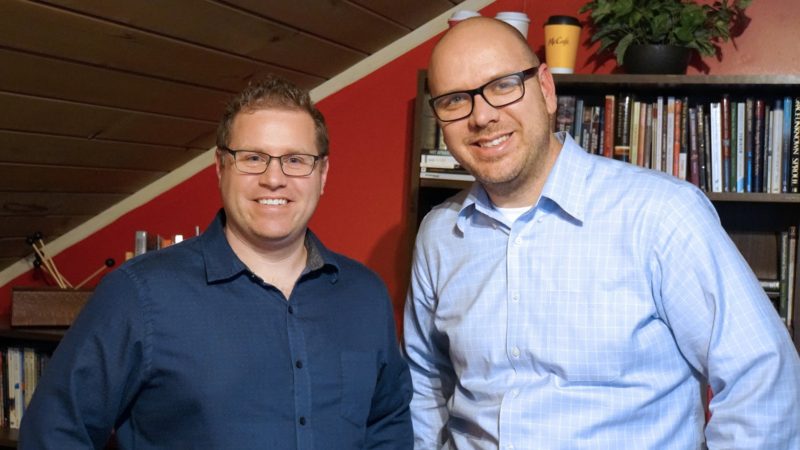
Pastor Bob Erbig and Pastor Dave Hentschel